
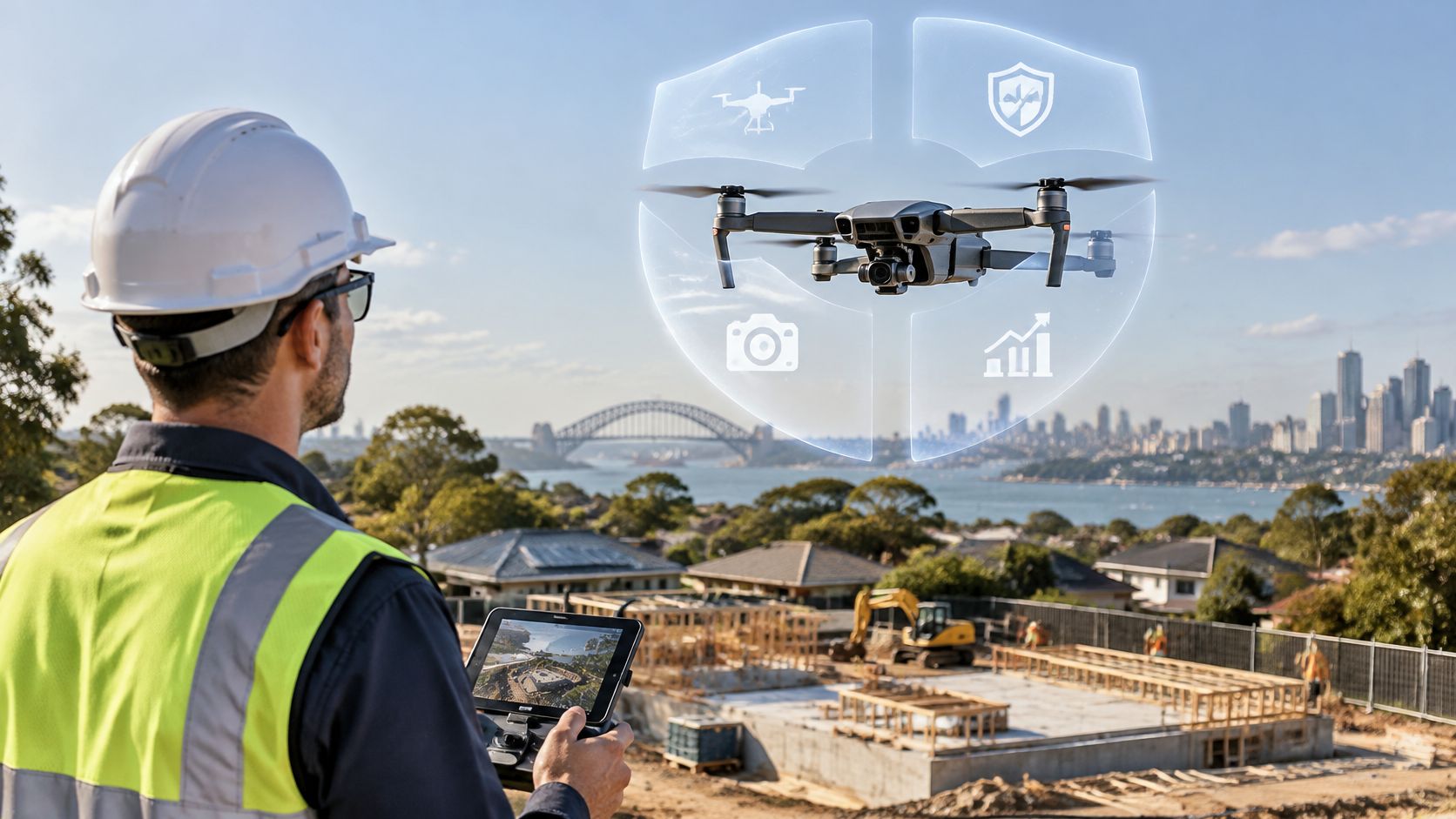
You've bought a drone for site inspections, progress photos or survey work, and a client has just asked for your certificate of currency. You check your general business policy and realise you don't know whether it covers an aircraft at all. That uncertainty is common, because drones sit at the junction of aviation rules, worksite contracts and ordinary business risk. UAV insurance in Australia isn't one cover. It's a set of covers that need to match how you fly, where you fly and what your contract promises. This guide builds that picture step by step, so you can spot gaps before a claim tests them.
Table of Contents
- The Four Covers Every Australian Drone Policy Should Address
- Regulatory Duties That Shape Your Drone Policy
- Third-Party Liability and Why Aviation Wording Matters
- Privacy and Data Risks Standard Policies Miss
- What Drives UAV Insurance Premiums in Australia
- Assess Your Cover with a Broker Before You Fly
The Four Covers Every Australian Drone Policy Should Address
Say a survey drone drifts sideways during a site inspection and comes down in a neighbouring yard. The airframe is cracked, the camera is damaged, a fence panel is broken and the survey can't be finished that day. The practical question isn't whether you're insured in general. It's which part of that loss your policy pays for, and which part stays with you. UAV insurance in Australia separates those costs into distinct exposures, and treating them as one lump is where operators get caught out.
Four Exposures in One Incident
A single incident can trigger several losses at once. The drone itself is one asset. Other people's injury or property damage is a separate legal exposure. Cameras and sensors can be worth more than the aircraft carrying them. Then there's the lost work while you wait for a replacement. Each exposure responds under a different part of a policy, with different limits, excesses and conditions, so you need to check them individually rather than assume one cover sweeps up the rest.
| Cover | What it pays for | Typical trigger | Who usually needs it |
|---|---|---|---|
| Aircraft hull | Repair or replacement of the drone after crash, collision or theft | Accidental damage to the aircraft | Every owner of a commercial drone |
| Third-party liability | Injury to people or damage to other people's property | Loss of control, collision, falling equipment or payload release | Anyone flying near people, roads or worksites |
| Payload and equipment | Cameras, sensors and attachments carried by the aircraft | Damage to attached equipment during flight, landing or transport | Surveyors, inspectors and photographers |
| Business interruption | Lost income or extra costs while a replacement drone is sourced | Insured loss that stops a project or service | Operators working to contracted deadlines |
Hull cover is the part pictured first, and it's often the smallest financial risk. A damaged airframe is a known, capped cost. Liability isn't capped in the same way, because you don't control whose property is below you or who walks into the flight area. That's why a cheap policy built mainly around the drone's purchase price can leave the largest exposure thinly covered. Payload cover matters for the same reason. A survey-grade sensor or cinema camera damaged in a hard landing can cost more to replace than the aircraft, and ground equipment such as controllers and ground stations may need to be listed separately.
Operators producing visual work for clients face the same split. A photographer shooting property marketing, perhaps exploring real estate videos with VideoTour.ai as one way clients present finished footage, still carries separate risks for the aircraft, the camera, harm to bystanders and a missed delivery date. The end use of the footage doesn't merge those exposures into one.
Who This Affects Now
This isn't a niche question for a handful of specialists. On 14 August 2025, CASA reported it had issued more than 40,000 Remote Pilot Licences in Australia. Many of those pilots fly for builders, surveyors, inspectors, agricultural businesses and media clients, and each of them creates some combination of the four exposures whenever they take off.
Exposure check: List which of the four exposures your next flight creates. If you can't point to a cover, limit and excess for each one, you've found a gap.
Business interruption is the cover operators most often skip, then regret. If a damaged drone delays a progress claim, a roof inspection or a contracted survey, the cost isn't just the repair bill. It's the rescheduled crew, the hire aircraft and the client conversation about a missed deadline. Work through your own flying carefully. Do you fly over or near people and property you don't own? Do you carry expensive attachments? Would a week without the aircraft breach a deadline? A policy that covers only the aircraft leaves the other three answers exposed, and it's cheaper to work that out on paper than after a neighbour's fence, or a client, is involved.
Regulatory Duties That Shape Your Drone Policy
Your insurance doesn't sit apart from aviation law. Insurers price and assess claims against the rules you were meant to be flying under, so a regulatory mismatch can become an insurance problem. Part 101 of the Civil Aviation Safety Regulations is the starting point, and CASA's Part 101 framework consolidates the rules for remotely piloted aircraft and sets the general operating limit at 120 metres, or 400 feet, above ground level.
Business Flying Is Regulated More Strictly
Recreational and commercial flying aren't treated the same. Every drone used for business or as part of a job must be registered regardless of weight, and that registration lasts 12 months. Operators conducting business activities must also hold the relevant operator accreditation or remote pilot licence. The excluded category is the lower-risk tier of operations that carries fewer conditions. Operations outside that category generally require a remotely piloted aircraft operator's certificate, or ReOC, and an aircraft operated under a ReOC must still be registered unless an applicable test-flight exception applies.
That tiering matters to an insurer because it describes your risk and your competence framework in shorthand. An excluded-category operator doing simple, low-risk flights presents differently to an underwriter than a ReOC holder flying heavier aircraft near controlled airspace. If your operations have grown but your credential, or your insurance proposal, still describes the simpler work you started with, the documents no longer match the risk.
| Use case | Registration | Operator or pilot credential | Insurance check |
|---|---|---|---|
| Business or work use, any weight | Required, lasts 12 months | Operator accreditation or remote pilot licence | Policy names the commercial purpose |
| Business drone 500 grams or less | Free registration | Operator accreditation or remote pilot licence | Registration is current before the policy is bound |
| Business drone above 500 grams | $40 levy per aircraft | Operator accreditation or remote pilot licence | Aircraft count matches the policy schedule |
| Operations outside the excluded category | Registration required | Remotely piloted aircraft operator's certificate | Proposal reconciled with the certificate scope |
| Flights above 400 feet | Registration plus any flight permission | Flight permission where specified | Permission in place before the flight |
The fees and penalties behind that table are concrete. CASA's registration requirements state registration is free for drones weighing 500 grams or less, drones above 500 grams attract a $40 registration levy per aircraft, and operating an unregistered business drone can attract a maximum fine of $18,200. Flight permissions may also be needed for operations above 400 feet or in specified aerodrome and restricted situations.
Registration Does Not Give You Rights Over Land
One point surprises many new commercial operators. The regulations don't grant you rights over the land you fly over, and they don't remove a property owner's rights in relation to injury or property damage caused by your aircraft. Permission to fly under aviation rules and permission from the landowner are separate questions. Flying lawfully in airspace terms doesn't settle a dispute with the owner of the roof, crop or yard below you.
CASA also advises operators to discuss potential third-party liability with an insurer and consider suitable insurance for damage caused by remotely piloted aircraft. Read that as a prompt to align three things before you fly for a client. Your registration must be current, your credential must fit the operation, and your policy must name the commercial purpose and match the number of aircraft on the schedule. If one of those three lags behind the others, the gap usually surfaces at the worst time, when an insurer is comparing your flight records against your proposal after something has gone wrong.
Third-Party Liability and Why Aviation Wording Matters
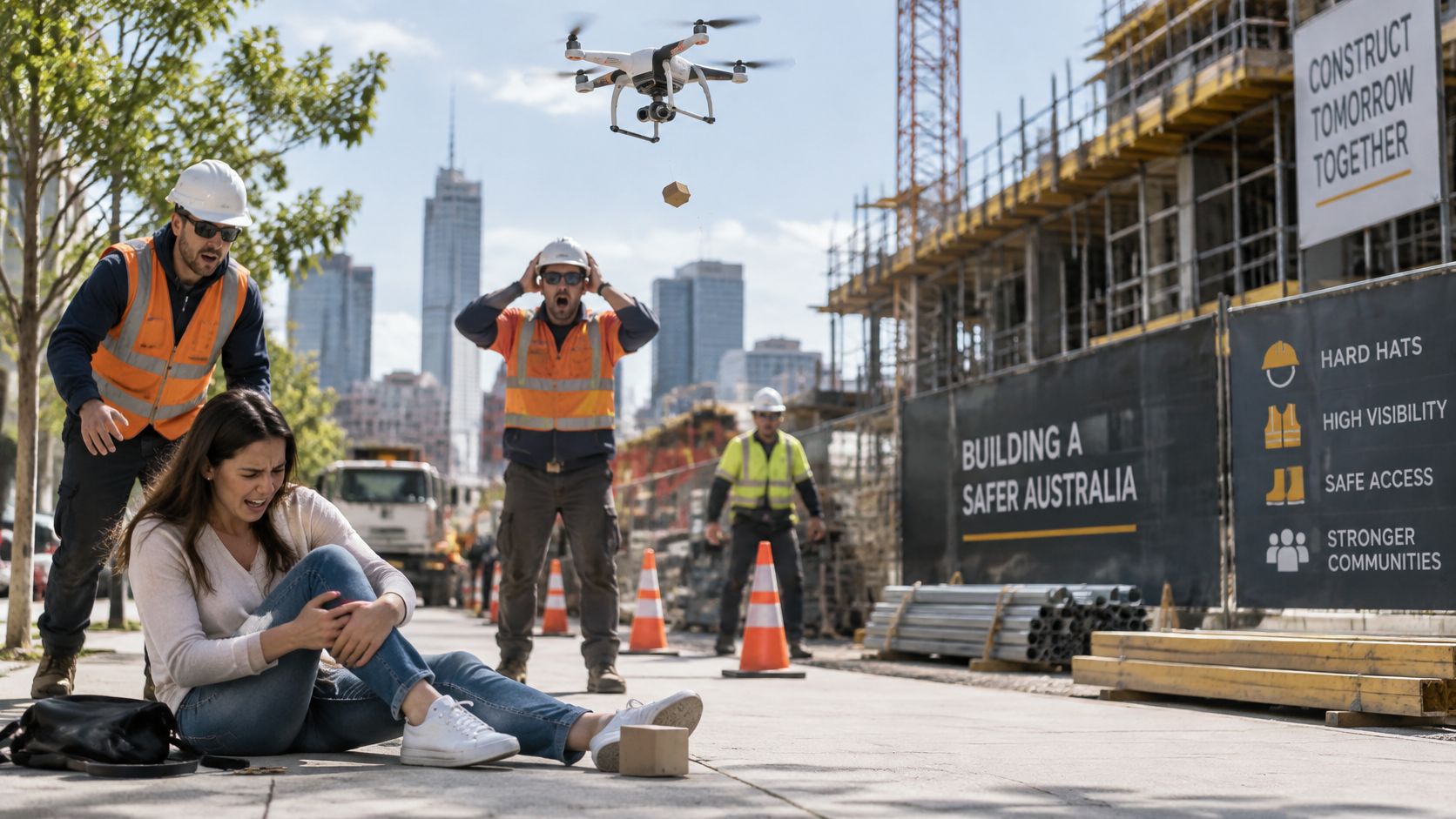
A mapping drone loses control over a suburban worksite, drifts past the fence line, and drops its payload onto a footpath. A pedestrian is injured. A parked car takes the impact. Third-party liability is the cover that can respond to the injury and the repair bill. It does not pay to replace your aircraft. Operators who mix those two jobs tend to spend on the drone they can see and leave the claim they cannot predict thinly covered.
Insurance Is Not a Risk Control
CASA's remotely piloted aircraft licensing and operations guidance strongly recommends operators obtain advice on third-party liability arising from drone operations and consider suitable insurance. CASA also states that an insurance policy is not treated as a risk-control or risk-mitigation measure when assessing an application from a certified remotely piloted aircraft operator.
That split matters on a live job. You cannot buy a policy in place of a safe operation. Liability cover sits beside competent remote pilots, documented procedures, airspace compliance, maintenance, site assessment and emergency-response planning. It does not stand in for them. Underwriters ask about procedures, pilots and maintenance records, not only the aircraft list, because they want to see how incidents are being prevented as well as how they would be paid for. An operator with tidy records is easier to place. The trade-off is time spent on documentation before the first flight, against a harder conversation with an insurer after a loss.
A liability policy pays after prevention fails. It does not count as prevention.
Why General Liability Wording May Not Respond
A business public liability policy can look wide enough until the exclusion schedule is read. Ordinary wording often carries aviation-related exclusions, and a drone is an aircraft. The same injury caused by a ladder on that site may be covered, while the injury caused by the aircraft is not, if flying was never named.
Our comparison of drone public liability cover against hull insurance sets out how those two sides differ. An aviation-specific specification should identify:
- The actual activity: inspection, survey, photography, spraying or another named use
- Aircraft and payloads: types flown and equipment carried
- Operating locations: worksites, farms, urban areas or controlled airspace
- Pilot arrangements: employees, contractors or both
- Proximity exposures: whether flights occur near people, roads, worksites or other aircraft
Those details are what the insurer prices: third-party bodily injury or property damage from loss of control, collision, falling equipment or payload release. Name them against the job, and the policy can be assessed against the work. Leave them generic, and a claim can fall into an excluded category even when the injury looks ordinary.
The Subcontractor Check
Builders and principals often buy drone services rather than fly themselves. The contract for those services should require the operator to hold registration, approvals and cover for the precise services being purchased, not drone work in general. Incorrect licensing, registration or approval to fly may void insurance. Confirm that scope with the insurer before the flight, not after a loss. A subcontractor accredited for simple excluded-category work who then flies a job that needed a ReOC and a specific permission may be uninsured for that flight, even if a certificate of currency looks current at first glance. Ask to see the credential, the aircraft registration and the policy scope, and match all three to the job you are commissioning.
Privacy and Data Risks Standard Policies Miss
A drone films a NSW residential development for a progress report. The flight is lawful, the aircraft lands undamaged and nobody is hurt. Yet the footage captures neighbours in their backyards, workers who did not expect to be recorded, and commercially sensitive site details. The resulting complaint, contract dispute or request to delete data may involve no physical damage at all.
Privacy Law Is Not One Drone Rule
Australian Government drone privacy guidance explains that privacy obligations can arise under Commonwealth, state and territory laws. Depending on the circumstances, relevant rules may concern surveillance devices, trespass, harassment, nuisance or workplace surveillance rather than drones specifically. A flight over a construction site, for example, may record identifiable workers or activity on neighbouring properties. The applicable questions depend on where you fly and what the camera captures.
Hull and property cover may not address allegations involving:
- Privacy complaints: Claims from neighbours, workers or members of the public about recording
- Data breaches: Loss of, or unauthorised access to, imagery and survey files
- Media liability: Claims arising from publishing or supplying footage
- Cyber exposure: Compromised accounts, storage or file-transfer systems
- Contractual liability: Duties accepted when imagery is supplied to a developer or head contractor
Storage and transfer choices affect these risks. If you share imagery with clients through cloud platforms, cloud security and management resources can help you consider access controls and storage practices. A cyber insurance policy addresses a different part of the exposure: losses connected with cyber incidents and data handling.
Covers to Review Alongside UAV Insurance
Aviation cover may not respond to every privacy, data or contract claim. Public liability is generally relevant to third-party injury or property damage. Professional indemnity may matter when a client relies on your interpretation or analysis of imagery. Cyber cover addresses data-related exposures, while contractual extensions may be needed for obligations imposed by a head contractor. The fit depends on the work: capturing footage alone creates different responsibilities from interpreting it and warranting conclusions.
Regulators are paying growing attention to advanced drone operations. For operators, the practical step is to check how privacy, data handling and client-contract duties fit alongside aviation cover before accepting a job. A contract requiring secure storage or restrictions on sharing footage can create obligations beyond the flight itself.
What Drives UAV Insurance Premiums in Australia
Operators often expect the premium to follow the drone's price tag. A more expensive aircraft does raise the hull sum insured, but insurers are mainly pricing exposure. Two businesses with identical drones can pay quite different premiums if one flies over empty farmland and the other inspects facades above busy footpaths. The aircraft is the same. The potential claim isn't.
The Factors Underwriters Price
| Premium factor | Why insurers price it | Detail to give your broker |
|---|---|---|
| Number and value of aircraft | More aircraft means more hull value and more potential liability | Make, model, weight and replacement value of each drone |
| Commercial purpose | Business flying carries exposures recreational flying does not | Activity, client type and whether flights are paid |
| Operating locations | Flights near people, roads, aerodromes or controlled airspace raise severity | Sites, distance from people and any airspace permissions |
| Pilot credentials | Licensing and experience affect the likelihood of an incident | Licence or accreditation numbers and years of operating experience |
| Altitude and flight type | Higher or beyond-visual-line-of-sight flights widen the area of exposure | Planned maximum height and any beyond-visual-line-of-sight plans |
| Payload value | Higher-value cameras and sensors increase the equipment loss | Sum insured for each camera, sensor or attachment |
Each row is really two questions. How likely is an incident, and how severe would it be? Pilot credentials and experience speak to likelihood. Locations, altitude and proximity to people speak to severity. Payload value and aircraft numbers set the size of a property loss. When you understand that split, broker questions that seem intrusive start to make sense. They're not gathering paperwork for its own sake. They're building the picture an underwriter needs to price likelihood against severity.
If you want the pricing side explored further, our guide to drone insurance costs in Australia looks at how those factors combine. We won't promise a premium figure here, because pricing depends on the insurer, the activity and your operating history. Anyone quoting a firm number without your aircraft, pilot, site and payload details is guessing.
Incomplete Details Create Expensive Surprises
A quote built on incomplete details can be re-rated later or disputed at claim time. Consistent declarations matter because a drone flown outside the scope declared on the proposal complicates a claim, even if the flight itself was competently run. Say you declare rural survey work, then accept a facade inspection over a city footpath without telling your broker. The severity profile has changed completely, and the insurer priced a different operation.
Comparison rule: Quotes are only comparable when they declare the same aircraft, pilots, sites and payloads. Different assumptions don't produce a like-for-like price.
Build one practical habit. Keep a current aircraft register, pilot list and site list, backed by a simple flight log recording date, location, pilot, aircraft and purpose. Update it when you buy a drone, hire a pilot or take on a new type of site. That register makes renewals faster, makes mid-term changes a short phone call instead of a reconstruction, and helps an underwriter see how your operation runs. It also protects you, because the log is often the first document requested after an incident. Accurate figures gathered before you seek quotes will save you both premium disputes and claim delays.
Assess Your Cover with a Broker Before You Fly
A mapping drone is already on the ute, batteries charged, when the site supervisor asks for a certificate that names the builder. The hull schedule lists the aircraft. The liability wording does not name the principal, and the camera that will film the facade is missing from the proposal. Fixing that mismatch is straightforward before take-off. After a privacy complaint or a damage claim, the same paperwork becomes the argument.
CASA's guidance on hiring a drone operator makes the point that commercial UAV insurance has to line up with CASA operating status and compliance evidence, not merely the drone's purchase price. It also notes that the regulations do not give an operator rights over land, and they do not remove a property owner's rights if an RPAS injures someone or damages property. A policy can insure the airframe and still miss the permission you fly under, the people your contract must protect, or the images your payload records.
Seven Checks Before You Bind Cover
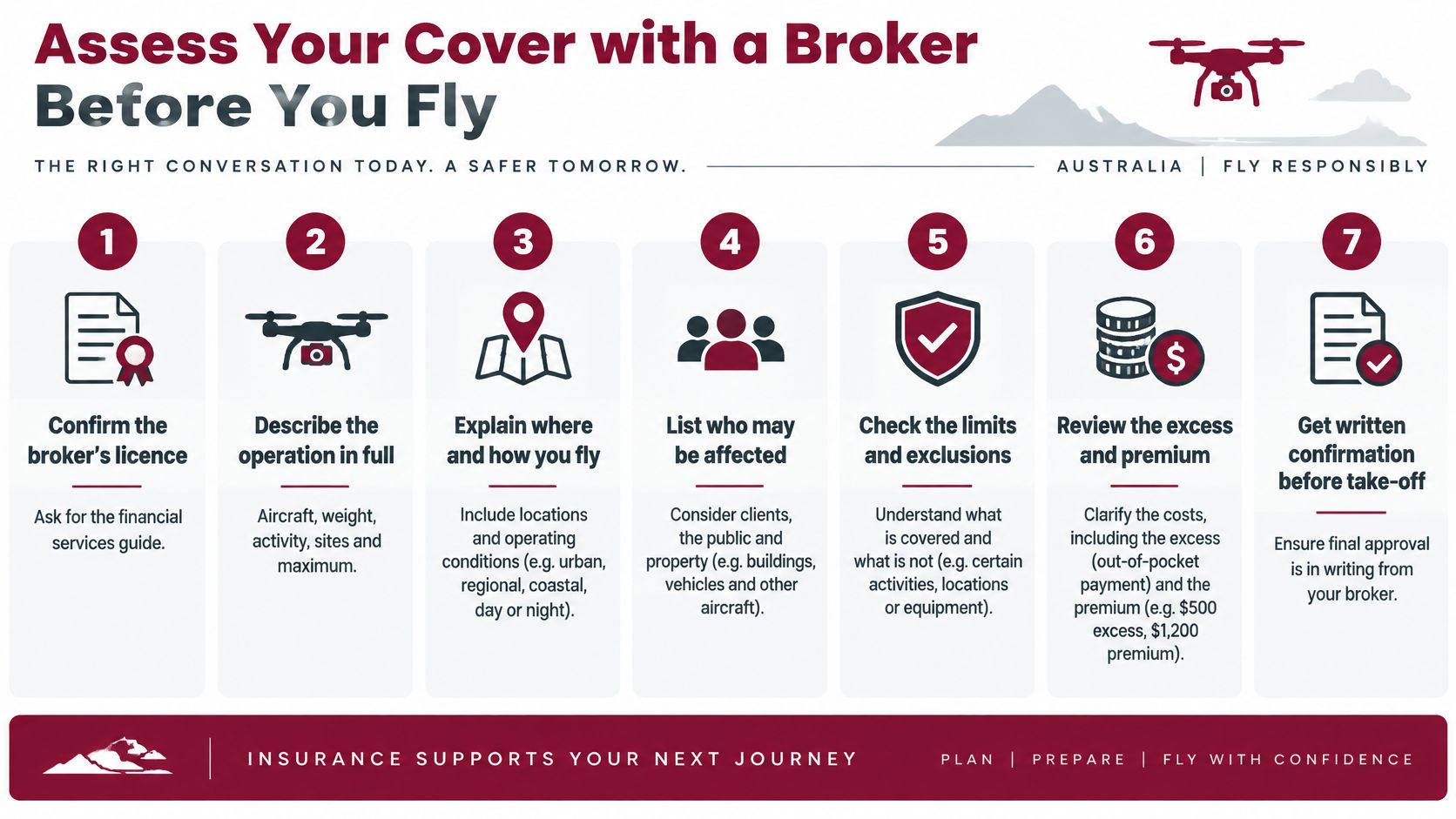
Work through these seven checks with a broker, in order, and keep the answers in writing.
- Confirm the broker's licence: Ask for the financial services guide so you know who you are dealing with and how they are authorised.
- Describe the operation in full: Give aircraft, weight, activity, sites and maximum altitude, not a one-line summary.
- Ask for the scope in writing: The written scope should cover hull, liability, payload, business interruption and any privacy or data extensions you are relying on.
- Reconcile the proposal with CASA: Check registration, pilot credentials, your ReOC or excluded-category basis, operating area, and any night or controlled-airspace permissions against the proposal.
- Check contract requirements: Confirm liability limits, insured parties, territorial scope, waiver of subrogation and the certificates of currency your principals require.
- Ask whether the insurer is overseas: Find out where the recommended insurer is located before you accept the placement.
- Review exclusions and claims process: Understand what is excluded, what documentation a claim needs and the timeframes that apply.
Checks 4 and 5 are where construction work most often comes apart. A principal's insurance clause may demand named insured parties, a set liability limit, a territorial limit, a waiver of subrogation, or a certificate of currency. A standard placement does not supply those terms on its own. Bring the clause itself, not a summary. The exact words on insured parties and subrogation are what the policy has to mirror. If the same flight also records people on a footpath or inside a neighbouring property, ask whether privacy and data cover sits inside that written scope. CASA status shows you may fly. It does not, by itself, settle a landowner's claim or a contractual privacy duty.
Working With ABS Insurance Brokers
ABS Insurance Brokers is an Australian-owned and operated brokerage. It holds Australian Financial Services Licence No. 700333. When you ask for insurance advice, ABS will tell you whether a recommended insurer is overseas and which country that insurer is located in. The Sydney office is at 2 Hartzell Place, Bankstown NSW 2200, at Bankstown Aerodrome, inside the Bankstown aviation precinct rather than at a generic city address.
You can speak with a broker on 1300 871 318. Bring four things to that first conversation:
- Aircraft list: make, model, weight and registration for each drone
- Site list: where you fly and how close you operate to people and property
- Pilot credentials: licences, accreditations and your ReOC or excluded-category basis
- Contract requirements: the insurance clauses from your current client agreements, including any privacy or data duties those clauses impose
Then take one closing action before your next flight. Request a quote, ask for the scope in writing, and file that written scope with your certificate of currency in the project records. If a principal, a landowner or an insurer later asks what you are covered for, you can answer from documents.
ABS Insurance Brokers Pty Ltd can review your aircraft, pilots, CASA permissions and client contract requirements, then help you arrange UAV cover that addresses hull damage, aviation liability, payloads and the privacy and data gaps your work creates. If you fly drones for construction, inspection, survey or media work anywhere in Australia, visit ABS Insurance Brokers Pty Ltd to start that conversation before your next flight.