

Public liability insurance is not automatically compulsory for every Australian business. Even so, it can become non negotiable the moment a contract, licence, landlord or client asks for proof before work begins. The legal test matters less than the practical one: will someone want a certificate before you step on site?
Table of Contents
- Do I Need Public Liability Insurance in Practice
- Quick Guide to Whether Public Liability Cover Is Usually Needed
- Why Experienced Operators Treat It as Core Cover
- A Quick Self-Check Before You Commit
- Third-Party Personal Injury
- Damage to Third-Party Property
- Legal Defence and Settlement Costs
- Public Liability Compared With Other Common Covers
- Reading Your Policy Wording Carefully
- A Plumber's Commercial Fit-Out Job
- What Happens Without the Right Certificate
- Checking the Contract Before You Sign
- Owner-Builders and Everyday Exposure
- Turning Contract Wording Into Action
- When A Visitor Trips Over Site Materials
- When An Excavator Damages A Neighbouring Wall
- When A Tradesperson Damages A Client's Fence
- Your Own Employees Are Not Third Parties
- Products Come With Their Own Conditions
- Limits, Excesses and Timing
- Activities Tied to Specific Exclusions
- Questions to Ask Your Broker
- Match the Policy to the Work
- Check the Contract Requirements
- Review the Certificate of Currency
- Keep Records and Ask Early
- Do I Need Public Liability?
- How Does Public Liability Differ From Professional Indemnity?
- What If My Subcontractor Has No Cover?
- Do Homeowners Need It for Their Own Building Work?
Do I Need Public Liability Insurance in Practice
It works a bit like a permit on a job. Plenty of work looks ordinary from the outside, yet the person paying you may still expect the paperwork to be in place first.
Some licences and approvals set cover as a condition, so the requirements attached to your trade or activity deserve a close read. Outside those cases, the pressure usually comes from commercial expectations rather than a statute.
Quick Guide to Whether Public Liability Cover Is Usually Needed
The same kind of accident can sit behind very different jobs. What changes is who carries the risk, who controls the site and who is likely to ask for evidence before you start.
| Situation | Is Cover Usually Needed? | Why It Matters |
|---|---|---|
| Builder on a residential project | Yes, usually | Homeowners and neighbours may be injured or have property damaged |
| Subcontractor on a commercial site | Yes, almost always | Head contractors typically require a certificate before site access |
| Owner-builder | Strongly recommended | Family, visitors and the public can be exposed during building work |
| Retail shop with no client contracts | Often recommended | Customers can slip, trip or be injured on the premises |
The pattern is fairly consistent. The hazard may look similar across these situations, while the contract, site rules or client expectation decides whether cover is simply prudent or effectively required.
Why Experienced Operators Treat It as Core Cover
Public liability sits among the more commonly held covers for small businesses. That says something useful: people who have been around contracts, disputes and site rules tend to treat it as part of the cost of being workable.
A missing certificate can stop a job before the first tool comes out of the ute.
Reading the insurance clause before signing is much easier than trying to repair a gap after someone has been hurt or property has been damaged. A few minutes with the wording can prevent a stalled mobilisation, a strained client relationship or an awkward conversation with a head contractor.
A Quick Self-Check Before You Commit
Before accepting the job, ask:
- Does the contract, tender or site induction mention insurance?
- Are the insured parties and limits clearly stated?
- Will a certificate be needed before work starts?
If any answer is yes, organise cover before commencement rather than after the first invoice or site visit. That keeps the job moving and puts you in a far stronger position if questions come up later.

Picture public liability insurance as a safety net stretched under your work. When your activities, equipment or site put someone outside your business at risk, the net catches the legal liability if that person claims you caused them harm.
Third-Party Personal Injury
A third party is anyone who isn't you or your business. That could be a customer, a visitor or someone walking past your site. If one of them gets hurt because of your work, the cover may respond to their legal claim.
Consider a delivery driver whose bag slides off a trolley and strikes a visitor in your showroom. That visitor could go on to claim medical costs and compensation, and this is exactly the sort of incident public liability is designed for.
Damage to Third-Party Property
Public liability also responds when your work damages someone else's property. Think of a crane swinging a little too far and clipping a neighbour's car. Or an excavator that cracks a boundary wall while digging out footings.
Legal Defence and Settlement Costs
Many policies also cover the legal defence and settlement costs of an insured claim, subject to the policy terms. These can include the reasonable costs of investigating, defending and settling a claim, and they add up faster than most people expect. Depending on the policy, debris removal and professional fees may also be included.
Winning a claim doesn't always mean walking away without a bill. Defence costs can start piling up long before anyone decides who is at fault.
Public Liability Compared With Other Common Covers
People asking whether they need public liability insurance often mix it up with other policies. The table below shows which cover responds to which kind of loss, so you can see where the gaps might be.
| Type of Cover | Who Is Protected Against | Typical Trigger | Key Limitation |
|---|---|---|---|
| Public liability | Members of the public and third-party property | Injury or damage caused to others | Does not cover your own employees |
| Product liability | Customers and users of goods you make or supply | Product allegedly causes injury or damage | Does not usually cover product recalls |
| Workers compensation | Your own employees | Work-related injury or illness | Does not cover third parties |
| Home Building Compensation (NSW) | Homeowners on residential building work | Builder fails to finish or defective work | Limited to eligible NSW residential projects |
As the table shows, each policy answers a different question. Public liability handles outsiders, workers compensation handles your own team, and the others fill specific niches. Many tradespeople end up needing more than one.
Reading Your Policy Wording Carefully
The schedule tells you who is insured, when the cover runs and how much cover you have. Excesses and exclusions can change what you actually receive when you make a claim, so read them before you rely on the policy.
If the wording feels confusing, a broker such as ABS Insurance Brokers can help you check that the policy fits the work you actually do.
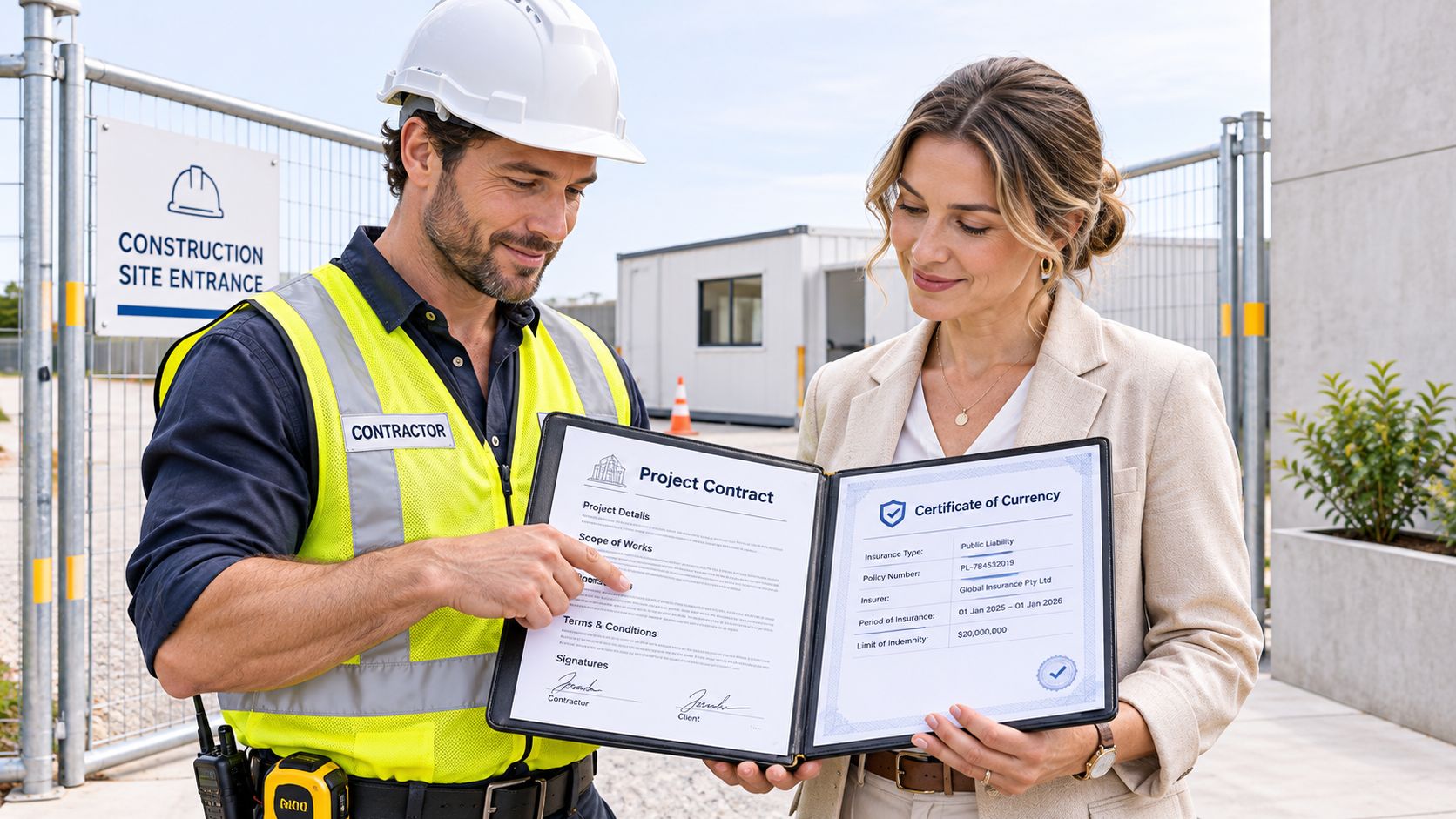
Plenty of people don't realise they need public liability insurance until a contract refuses to move forward without it.
A Plumber's Commercial Fit-Out Job
Picture a plumber who has just won a commercial fit-out. Everything seems settled, until the head contractor says site access won't be released unless a certificate of currency arrives by Friday.
Government and commercial construction contracts often require liability cover. Many also spell out a minimum limit, the parties who must be named as insured, and the proof needed before any work starts.
What Happens Without the Right Certificate
It doesn't take much to stall a job. A certificate with the wrong limit, or one that doesn't name the correct insured party, can leave a business unable to tender, unable to start, or out of step with its contract.
A certificate that looks fine on paper can still fail the contract if the limit or insured name is wrong.
Checking the Contract Before You Sign
Reading the insurance clause before you sign is far easier than sorting out a gap after something goes wrong. A few minutes with the wording can save you a stalled start and an awkward call to the head contractor.
Contracts and client agreements usually set out the insurance you must hold before work begins. For guidance on how that wording is put together, see how to write estimate validity terms.
Before you accept the job, check these points:
- Does the contract state a minimum public liability limit?
- Who must be named as an insured party?
- Is a certificate of currency needed before work starts?
- Do subcontractors need their own cover?
Once the paperwork is in order, it's worth reading how to get a certificate of currency for public liability insurance.
Owner-Builders and Everyday Exposure
Owner-builders often assume the contract is someone else's problem. In reality, they carry their own exposure when family members or members of the public are injured during building work.
Even a mate popping round to lend a hand can become a claim if they trip over materials. That's why cover is worth considering long before any contract lands on your desk.
Turning Contract Wording Into Action
Key takeaway: reviewing contract wording before you sign is far easier than resolving a coverage gap after an incident.
Think of it like checking the brakes before a long drive. The inspection takes minutes, but skipping it can cost you far more down the road.
Ask for the contract's insurance requirements in writing, not just over the phone, so nothing gets lost later.
Getting the details right early keeps the job moving and protects your reputation with every client.
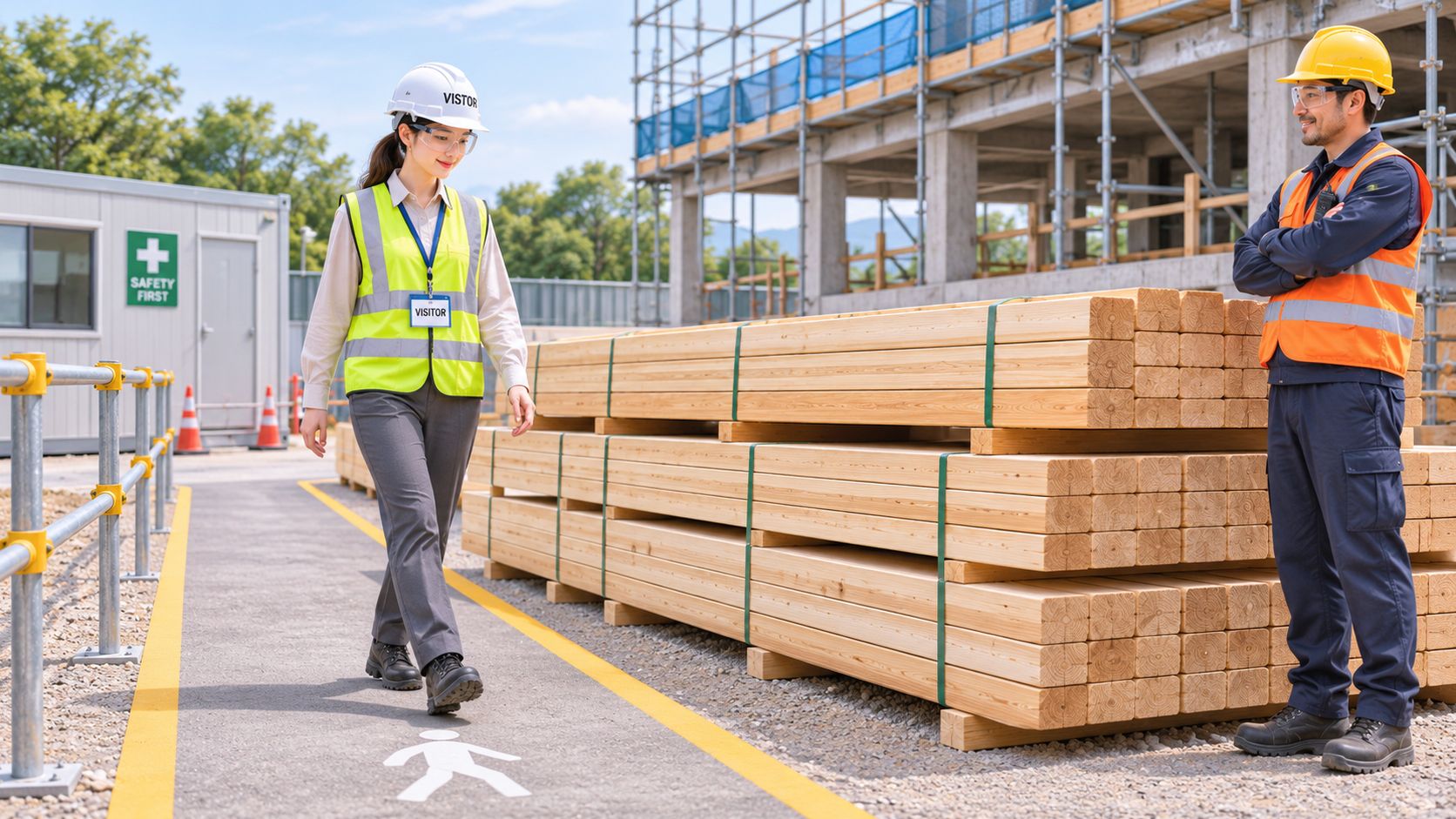
When A Visitor Trips Over Site Materials
It rarely starts with something dramatic. More often it is a stack of timber left in a walkway, a cable trailing across the path, or a ladder parked where it should not be.
Then a visitor takes one wrong step and you are dealing with an injury claim. If they can show your work or the way the site was managed caused it, public liability insurance may respond to the third-party injury claim and related legal costs, depending on the policy.
You do not have to be standing right there for it to be your problem. Messy housekeeping, half-finished barricades, or missing warning signs are often enough to support an allegation of negligence.
Fault is not always clear-cut at the start, but the defence and settlement costs can add up quickly anyway.
When An Excavator Damages A Neighbouring Wall
Excavation work does not always stay neatly inside the boundary. A shifting bucket, vibration from plant, or unexpected ground movement can crack a neighbour’s wall before anyone has time to react.
And suddenly the developer is facing a bill for repairs or structural rectification. It is not just about who owns the machine either.
Control of the site, maintenance records, operator experience, and ground conditions can all come into play. In this kind of event, public liability may help with the third-party property damage side, while contract works and plant covers deal with separate losses. It all comes down to wording, excesses, and exclusions.
When A Tradesperson Damages A Client's Fence
Picture a landscaper mowing close to a timber fence and clipping it. The client says it was careless. The landscaper says the boundary was unclear or the timber was already rotten.
No one meant for it to happen, but a claim can still follow. Public liability insurance is there for legal liability to third-party property, as long as the work falls within your insured activities and policy conditions.
Think about what is sharing the same space on a construction site:
- Falls from height and falling objects
- Moving vehicles and mobile plant
- Temporary structures and changing ground conditions
- Workers, clients, and visitors coming and going
That mix is exactly why Do I Need Public Liability Insurance is such a real question for builders, developers, and tradies. It is not theoretical.
Before you take on a job, line up the actual activities, the site risks, and the contract requirements against what your policy says. If anything looks uncertain, get your broker to confirm cover and limits before you set foot on site.
ABS Insurance Brokers can go through this with builders, developers, and trade businesses across Australia. A free, no-obligation chat is a straightforward way to spot the gaps before an incident turns them into something far more expensive.
Most business owners assume their policy covers everything that could go wrong. The gaps tend to surface when a claim lands.
Public liability responds to third-party injury and property damage caused by your work. It was never designed to cover every risk a business carries.
Your Own Employees Are Not Third Parties
If someone on your crew gets hurt on site, public liability generally stays out of it. That claim belongs under workers compensation, which covers your own employees for work-related injuries.
Volunteers and labour hire muddy the waters. If a mate lends a hand on Saturday and falls off a ladder, workers compensation may not respond either.
Products Come With Their Own Conditions
Product liability is a separate cover aimed at manufacturers, importers, distributors, retailers and suppliers. It responds when something you make or supply allegedly causes third-party injury or property damage.
What it generally won't pay for is recalling or replacing a faulty product. Separate product recall cover may need to be arranged through a broker. Our guide to product liability insurance for Australian contractors explains more.
Limits, Excesses and Timing
Three figures decide how much a claim actually pays:
- The policy limit, which caps what the insurer will contribute
- The excess, which stays your responsibility
- The notification deadline, where a missed date can cost you cover
Late notification is one of the most common reasons a legitimate claim gets knocked back.
Activities Tied to Specific Exclusions
Some kinds of work carry their own conditions. Work at heights may require certification, demonstrated competence and documented safety systems. Certain structural engineering and design work sits outside a standard construction policy entirely.
Contract works and plant cover sit separately too, so damage to the project itself or your machinery may need its own insurance.
Questions to Ask Your Broker
- Which activities are listed as insured?
- What exclusions apply to the work I actually do?
- What excess applies, and does it change by claim type?
- When must I notify a claim, and in what form?
A policy matching your real activities beats a higher limit that never applies.
Reading the schedule and exclusions before a job starts costs an afternoon. Reading them after an incident costs far more.
Book a free, no-obligation chat with ABS Insurance Brokers to check your cover against the work you actually do.
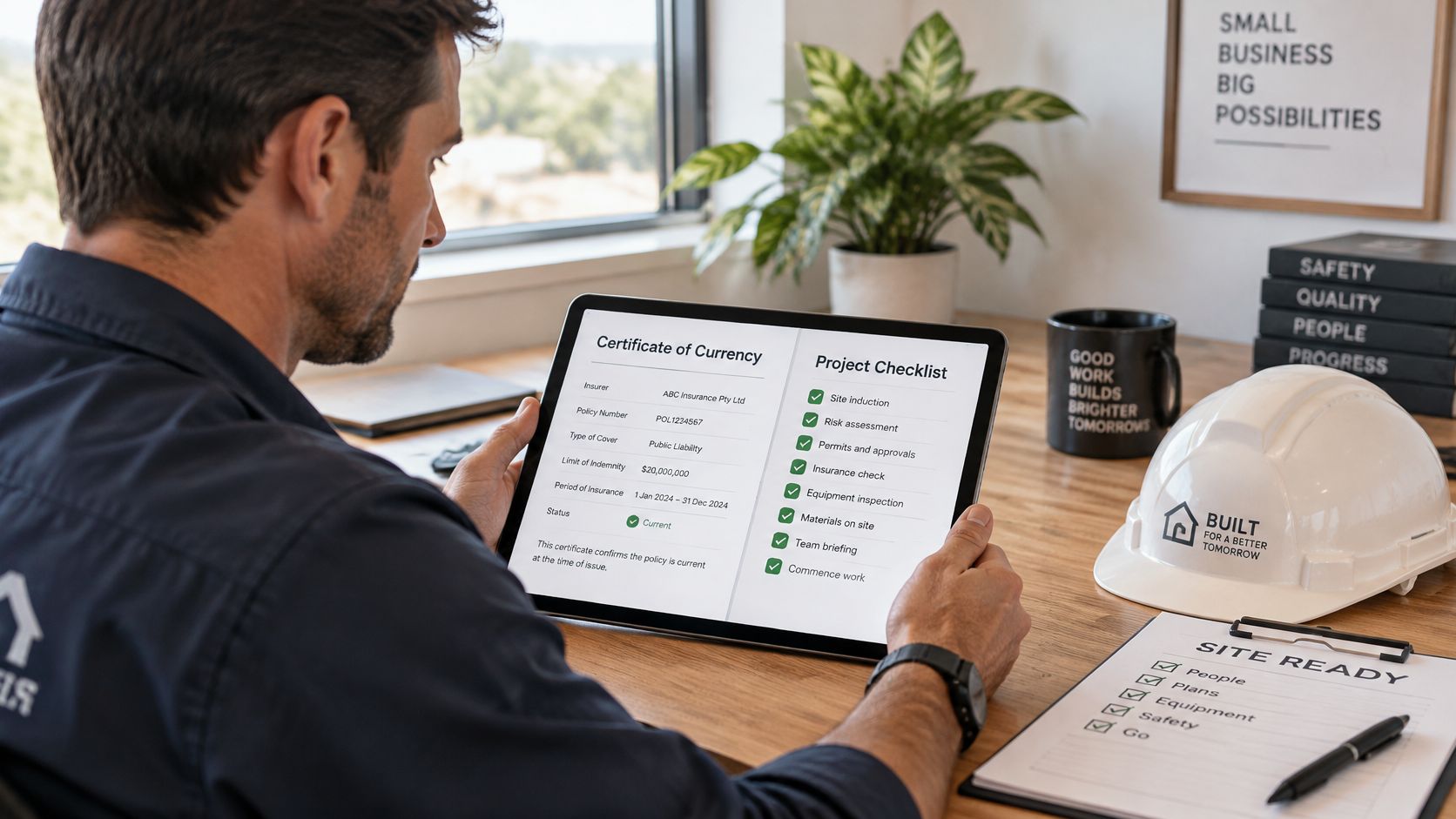
Before you say yes to a job, read the policy the way you would read a scope of works. The insured activities, limit and excess need to line up with the work you will actually perform.
Match the Policy to the Work
Start with the schedule. Check that your trade, products and services are described properly, because a builder installing kitchens carries a different risk profile to a manufacturer supplying electrical goods or a contractor operating specialist plant.
Then look at the numbers behind the cover: annual turnover, subcontracting income and the value of each project. Those details shape how the insurer views the exposure and whether an excess or restriction is likely to apply.
A high limit offers little protection if the activity that caused the damage sits outside the policy.
Check the Contract Requirements
Put the contract next to the policy before you sign. Confirm the required public liability limit, the parties that must be named, the excess and the date on the certificate.
A gap here can stop a job cold. If the contract asks for $10 million and your policy provides $5 million, that is a real compliance problem rather than a paperwork technicality.
Clarify subcontractor requirements too. Find out whether they need their own cover and whether their limits must be listed separately, and never assume the head contractor’s policy automatically protects your business or crew.
Review the Certificate of Currency
A certificate of currency shows that a policy is active. It does not prove every contract condition has been met.
Check these points:
- The policy number and insured business name
- The commencement and expiry dates
- The limit of liability
- The named insured parties
- The insurer’s authorised contact details
If the certificate is out of date or names the wrong entity, ask your broker for a replacement before work starts. File the final version with the signed contract and project records.
Keep Records and Ask Early
Keep every renewal, endorsement and notification in one place. That simple habit can save a lot of arguing later if a client questions whether cover was active at the time.
Get advice early when a request is unusual, the project is larger than normal, or your operations have changed. For broader context, see our guide to insurance for contractors.
Before mobilising, ask for a free, no-obligation review with ABS Insurance Brokers. Their Australian-owned team can help confirm the policy, limit, insured parties and exclusions align with the next project.
Do I Need Public Liability?
As a sole trader, the short answer is usually yes. Especially if you're dealing with clients face-to-face, working on someone else's property, or doing any kind of building work.
Having no employees doesn't mean you have no risk. And it's worth knowing — if you get hurt on the job, that's not what this type of cover is for.
Think of it as a financial guardrail. If someone outside your business says your work, your tools, or your site caused them injury or damaged their property, this is the policy that may respond.
It won't take the place of workers compensation for staff. But it can help with legal defence costs and settlements, within your limits, excess and exclusions.
How Does Public Liability Differ From Professional Indemnity?
It comes down to the type of loss. Public liability is about physical injury or tangible property damage — a visitor tripping over cables, a tile falling and smashing a benchtop.
Professional indemnity is different. It responds to financial loss caused by your professional advice, like an error in a design plan or poor consultancy advice. Many builders carry both for that reason.
Always check your insured activities and limits carefully, because cover for one type of risk doesn't automatically mean cover for the other.
What If My Subcontractor Has No Cover?
Don't just assume their gap becomes your problem — but don't ignore it either. Liability can split in different ways depending on the contract and the incident.
Practically speaking, protect yourself upfront:
- Ask for their certificate of currency before they start
- Check the limit is adequate for the job
- Confirm who is responsible for notifying the insurer
Keep those certificates and records on file. If a claim comes up months later, you'll want proof.
Do Homeowners Need It for Their Own Building Work?
It's strongly recommended. Once work starts, you’ll likely have tradies, couriers, neighbours, even family moving around the site.
Even a small project with no formal contract still carries exposure. And if you're an owner-builder, the rules and policies can look quite different, so check what applies to you.
Before you take on a project, line up your policy against the actual work, the contract terms, and the site risks. You can request a review from ABS Insurance Brokers via their website.