Plant and Equipment Insurance for Construction Businesses
Plant and equipment insurance should be reviewed against the machinery you own or hire, where it operates and how it is transported and stored. Accidental damage, theft and machinery breakdown may be treated differently under the wording. Compare ABS’s plant and machinery insurance and machinery breakdown cover when assessing your needs.
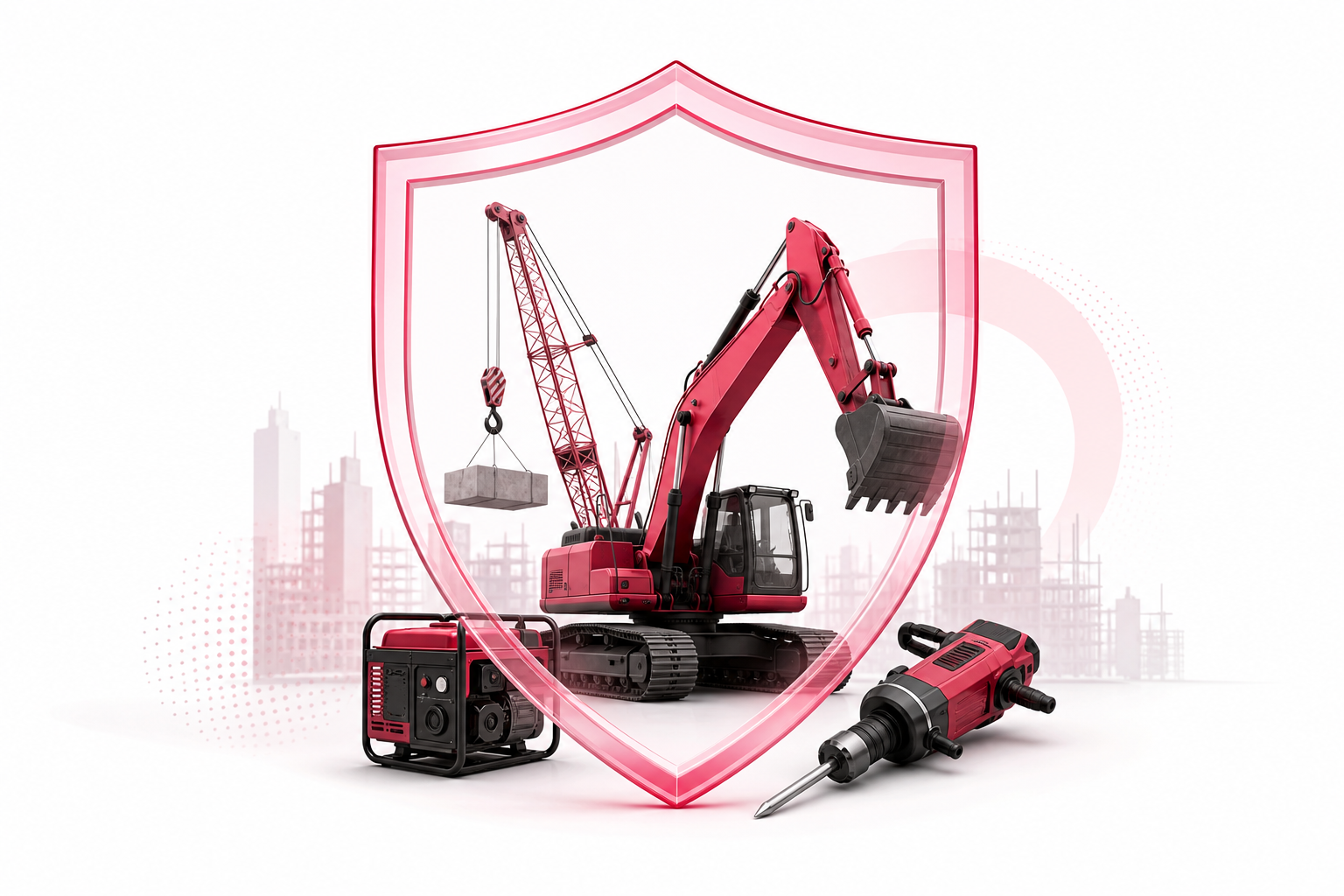
Construction machinery is among the most expensive and vulnerable assets your business owns. A tracked excavator, a crane, a concrete pump: these assets sit on open sites, move between jobs, and face daily exposure to damage, theft, and mechanical failure. The right insurance keeps your project running and your finances intact when something goes wrong.
Plant and equipment insurance: what to check
Plant and equipment insurance is a commercial policy that covers the physical loss or damage of machinery used in construction and civil works. It applies to machinery your business owns outright, as well as plant you hire in from a third party. Both categories carry different policy structures, so it pays to know which applies to your situation before you arrange cover.
Owned plant refers to machinery your business purchased or financed. The policy responds to loss or damage to those assets directly. Hired-in plant refers to machinery you lease or rent from another party. Cover for hired-in plant typically protects you against your legal liability for damage to equipment you do not own, including any continuing hire charges the owner keeps billing while the machine is off the road.
Standard inclusions across most plant and equipment policies include:
- Accidental damage (on-site and in transit)
- Theft or attempted theft
- Fire and explosion
- Malicious damage
- Machinery breakdown (on some policies, or as an add-on)
- Debris removal costs following a covered loss
Common exclusions are equally important to know before you commit to a policy. Most insurers will not respond to:
- Wear and tear or gradual deterioration
- Mechanical or electrical breakdown where it is not separately covered
- Operation by an unlicensed or unqualified operator
- Damage caused by wilful neglect or failure to maintain the equipment
- Consequential loss (lost income or project delays) unless specifically included
What counts as plant and equipment? The category is broad. It includes earthmoving machinery such as excavators, bulldozers, and graders; lifting equipment such as cranes, forklifts, and hoists; concrete and pumping equipment; compactors and rollers; and smaller portable items such as generators, compressors, and power tools. If it is used to carry out construction work and it has a dollar value, it belongs on your plant schedule.
One point many construction businesses overlook: a policy only covers what is listed on the schedule. If you acquire new equipment mid-policy and do not notify your insurer, that asset may not be covered when a claim arises.
Who Needs Plant and Equipment Cover?
Any construction business that owns, operates, or hires machinery needs to consider this cover. That includes sole traders running a single machine, subcontractors who bring their own equipment to site, and larger construction firms managing a full fleet.
Excavator insurance is one of the most common applications. Excavators are high-value, high-exposure assets. They operate in environments where ground collapse, contact with underground services, and collision with other plant are genuine daily risks. A single incident can write off a machine worth well over $100,000.
Mobile plant and equipment insurance applies to machinery that moves between sites, which describes most construction equipment. Mobile plant faces additional exposure during transit, loading, and unloading, and policies need to reflect that. Check whether your policy covers the machine only while it is on a named site, or whether cover follows the machine wherever it goes.
Beyond earthmoving contractors, the following business types routinely need this cover:
- Civil construction companies
- Demolition contractors
- Crane and lifting operators
- Concrete and formwork contractors
- Landscaping and earthworks businesses
- Hire companies that own plant leased to others
If your contract requires you to maintain insurance over plant and equipment, which is common in commercial construction and government work, the obligation is not just practical. It is contractual. Failing to hold adequate cover can put you in breach and expose you to claims from the principal.
Subcontractors working on larger sites should also check whether the head contractor's policy extends to their equipment, or whether they need their own cover. In most cases, a head contractor's policy will not cover a subcontractor's owned plant.
What Does Plant and Equipment Insurance Cost?
No single premium applies to all construction businesses. Insurers rate plant and equipment policies based on several factors, and the final cost reflects the specific risk profile of your operation.
The main factors that affect your premium include:
Asset value. The sum insured is the starting point. Whether you insure on an agreed value or market value basis also affects the premium, and the difference matters at claim time. Agreed value means the insurer pays the agreed sum without depreciation deductions. Market value means the payout reflects what the machine was worth at the time of loss, which may be considerably less than replacement cost.
Usage and operating environment. A machine working on a remote mine site carries more risk than one operating on a suburban residential build. Insurers consider the type of work, the terrain, and the hours of operation.
Claims history. A business with a history of frequent or high-value claims will pay more. Conversely, a clean claims record generally works in your favour at renewal.
Location. Where your equipment is stored and operated affects theft and weather risk. Some postcodes carry higher theft premiums than others.
Operator qualifications. Insurers may ask whether operators hold relevant licences and tickets. Unqualified operation is a common exclusion, and some insurers price policies based on the qualifications held by your team.
One risk worth flagging is underinsurance. Research from Marsh's 2012 report on Asia's industrial sector found that businesses in that sector often underinsure their assets by as much as 60% compared to actual replacement value. While that figure comes from Asia's industrial sector rather than Australian construction specifically, the pattern is common wherever asset values are not reviewed regularly. If your plant schedule reflects purchase prices from several years ago, you may be significantly underinsured today.
If your equipment is under a finance or chattel mortgage agreement, your financier will typically require you to hold insurance over the asset for the life of the loan. Check the specific requirements in your finance contract, as some lenders specify minimum cover types or agreed value conditions.
Key Policy Features to Compare Before You Buy
Not all plant and equipment policies are built the same. Before you commit, compare these features directly. They determine how much you actually recover when a claim occurs.
Agreed value vs. market value. Agreed value policies pay the sum you and the insurer agreed at inception, with no depreciation deduction. Market value policies pay what the machine was worth at the time of loss. For older equipment, the gap between those two figures can be substantial. Know which basis your policy uses before you sign.
New-for-old reinstatement. Some policies replace a damaged or destroyed machine with a new equivalent, rather than paying a depreciated value. This benefit typically applies only to newer plant. As an illustration of how insurers structure this, Aviva's plant and equipment policy provides new-for-old reinstatement for equipment less than 24 months old from its original purchase date. Confirm whether your policy includes this feature and what the age threshold is.
Continuing hire charges. If you damage hired-in plant, the owner keeps billing you while the machine is off the road for repair or replacement. Cover for continuing hire charges picks up those costs. Without it, you pay out of pocket for a machine you cannot use.
Machinery breakdown. Some policies include breakdown cover as standard; others treat it as an optional add-on or exclude it entirely. If breakdown is not included, you may need a separate machinery breakdown insurance policy to cover mechanical or electrical failure that is not caused by an external event.
Transit cover. Check whether the policy covers your equipment only while it is on a named site or whether it follows the machine during transport between sites. Mobile plant moves constantly, and a gap in transit cover is a real exposure.
Maintenance conditions. Insurers generally require you to keep equipment in a serviceable condition and may ask for evidence of routine maintenance. If a claim arises and the machine was not properly maintained, the insurer may reduce or decline the payout. Keep service records for every item on your plant schedule.
Automatic cover for newly acquired plant. Some policies provide a short window of automatic cover when you add new equipment, giving you time to notify the insurer and update the schedule. Others require notification before cover attaches. Confirm which applies to your policy.
Plant and Equipment Insurance in Victoria and NSW: What You Need to Know
Plant and equipment insurance follows the same core structure across Australia, but there are practical and regulatory differences between states that construction businesses in Victoria and New South Wales need to understand.
Plant and equipment insurance in Victoria sits alongside the state's occupational health and safety framework. WorkSafe Victoria regulates the registration and safe operation of certain classes of plant, including cranes, hoists, pressure equipment, and amusement structures. Registered plant must meet design registration requirements, and operators of certain plant categories must hold a high-risk work licence. While these are safety obligations rather than insurance requirements, they are directly relevant to your cover. If a claim arises from the operation of unregistered plant, or from an operator who lacked the required licence, your insurer may decline the claim on the basis of an exclusion for unlicensed or non-compliant operation.
Plant and equipment insurance in NSW operates under a similar framework. SafeWork NSW administers plant registration and licensing under the Work Health and Safety Regulation 2017. Certain items of plant, including pressure vessels, cranes, and scaffolding above specified thresholds, must be registered before use. Operators of certain high-risk plant must hold a SafeWork NSW high-risk work licence. As in Victoria, failing to meet these obligations does not just create a safety risk; it can affect whether your insurer responds to a claim.
In both states, if your plant operates on a public road, for example, a self-propelled machine travelling between sites under its own power, it may also require registration under the relevant state's road traffic legislation and a separate compulsory third party (CTP) insurance policy. Your plant and equipment insurance policy does not replace CTP or third-party property cover for road use. Check with your insurer or broker whether road transit is covered, and whether any road-going plant needs to be separately registered and insured.
One practical step: when you arrange cover, tell your broker which state or states your plant operates in. Multi-state operators may face different licensing and registration obligations across jurisdictions, and your policy needs to reflect where the equipment actually works.
How to Make a Plant and Equipment Insurance Claim
Following the right steps after an incident protects your claim and helps the insurer assess it quickly. Work through these in order.
Identify all affected equipment. Before you do anything else, confirm which machinery, attachments, and portable tools are involved. Cross-reference against your plant schedule to confirm they are listed on the policy.
Secure the area. Immediately after an incident, make the site safe. Prevent access by unauthorised personnel and take steps to stop additional damage or theft from occurring.
Cease operations on the damaged plant. Do not continue using damaged machinery. Operating a damaged machine can worsen the loss and may give the insurer grounds to reduce or decline the claim.
Document the damage thoroughly. Photograph the damage from multiple angles before anything is moved or cleaned up. Keep any debris, broken components, or detached parts on site for inspection by a loss adjuster.
Report the incident to your insurer or broker. Contact your insurer or broker as soon as practicable. For theft, report immediately and also notify police to obtain an event number. Most policies require notification within 30 days for other incidents, but earlier is always better.
Submit a completed claim form. Provide the insurer with the make, model, and serial number of each affected item, along with a precise description of what the machine was doing at the time of the incident. Include any relevant maintenance records, operator qualifications, and site documentation.
Keeping your plant schedule current before an incident occurs makes every one of these steps faster. A schedule with accurate values, serial numbers, and purchase dates removes the most common sources of delay in claim assessment.
How ABS Insurance Brokers Can Help You Arrange Cover
ABS Insurance Brokers is an Australian-owned insurance brokerage that sources and arranges specialist insurance policies for builders, construction businesses, and general commercial clients. Rather than going direct to a single insurer, you work with a broker who assesses your plant schedule, your operating states, and your contractual obligations before approaching the market on your behalf.
ABS Insurance Brokers operates as part of the Steadfast Network, which gives it access to a wide range of insurers and products that are not always available through direct channels. That matters when your fleet includes high-value or specialised equipment, or when you operate across multiple states with different licensing requirements.
The process is straightforward. Contact the team by phone or submit an online quote request, and a broker works through your requirements with you. They can identify gaps in your current cover, advise on agreed value versus market value structures, and confirm whether your policy follows your plant across sites and state borders.
If you want specialist advice on arranging cover that reflects what your business actually operates, speaking with a construction insurance broker is a practical starting point. A broker who understands construction risk will ask the right questions before placing your cover, not after a claim arises.
FAQs
Does plant and equipment insurance cover hired-in machinery I don’t own?
Yes, most policies include a hired-in plant section that covers your legal liability for damage to equipment you lease or rent from a third party. This is separate from cover for plant you own. Check the policy schedule to confirm hired-in plant is listed and that the sum insured reflects the value of the equipment you typically hire. Some policies require you to declare hired-in plant separately.
What is ‘continuing hire charges’ cover and why does it matter?
When you damage hired-in plant, the owner continues to charge you the daily or weekly hire rate while the machine is off the road for repair or replacement. Continuing hire charges cover picks up those costs. Without it, you pay for a machine you cannot use. The exposure can run for weeks if the equipment needs specialist repair or if a replacement is not immediately available. Confirm whether your policy includes this feature and what the maximum period of cover is.
Is machinery breakdown the same as plant and equipment insurance?
No. Plant and equipment insurance responds to physical loss or damage caused by an external event such as accidental damage, theft, or fire. Machinery breakdown insurance covers mechanical or electrical failure that occurs from within the machine itself, without any external cause. Some plant and equipment policies include breakdown as an add-on, but many do not. If breakdown is excluded from your policy, you may need a separate machinery breakdown insurance policy to avoid a gap in cover.
Do I need separate public liability cover for my plant and equipment?
Yes. Plant and equipment insurance covers physical loss or damage to the machinery itself. It does not cover your legal liability for bodily injury or property damage caused to third parties by the operation of that plant. You need a separate public liability policy for that exposure. If your plant operates on a public road under its own power, you may also need compulsory third party (CTP) insurance under your state's road traffic legislation. Speak with your broker about how these policies work together.
What maintenance records do insurers typically require to keep a policy valid?
Insurers generally require that plant and equipment is kept in a serviceable condition and operated according to the manufacturer's guidelines. If a claim arises and the equipment was not properly maintained, the insurer may reduce or decline the payout on the basis of a maintenance exclusion. Keep service records, operator logbooks, and any inspection certificates for every item on your plant schedule. The specific documentation an insurer asks for will vary by policy, so confirm the requirements with your broker when arranging cover.
Conclusion
Plant and equipment insurance protects your machinery against accidental damage, theft, and breakdown. The right policy covers both owned and hired-in plant, follows your equipment across sites and state borders, and pays out on terms that reflect actual replacement cost rather than a depreciated value.
Before arranging cover, review your plant schedule to confirm every item is listed with accurate values and serial numbers. Decide whether agreed value or market value suits your situation, check whether machinery breakdown is included or needs to be added separately, and confirm that your policy meets any contractual or finance obligations you are already bound by. A broker who specialises in construction risk can work through those questions with you and approach multiple insurers to find cover that fits your operation.