
How Much Does Owner Builder Insurance Cost in NSW
Owner builder insurance cost depends on the project, construction period, insured values and cover selected. Use current quotes based on your plans and responsibilities when preparing the budget. ABS’s owner builder insurance service can help you review project cover and the information needed for a meaningful comparison.
You're probably at the quoting stage right now, staring at a build budget, a permit file, and half a dozen insurance terms that don't line up. If you want a straight answer, start thinking like a broker, not like an online calculator. A tidy renovation plan or even a design tool such as best free garden design software can help with scope, but insurance pricing still comes down to the risk details insurers ask for.
Table of Contents
- Owner builder insurance cost: prepare a project-specific budget
- How NSW Insurance Rules Shape an Owner Builder Budget
- What Moves the Premium
- A Worked Example for a Mid-Range NSW Project
- The Costs Most NSW Owner Builders Forget to Budget
- Getting Quotes You Can Actually Compare
Owner builder insurance cost: prepare a project-specific budget
A $350,000 knockdown-rebuild in Parramatta with two licensed trades needs a different insurance budget from a small bathroom renovation in Newcastle. That is the question to ask: what policies does this job need, who is on site, and what is each line item likely to cost?
In NSW, owner-builders usually cannot rely on HBC cover for their own work, so the budget has to be built around the actual risk mix. If you are pricing a renovation, a staged addition, or a new build, write down the scope, the site conditions, and every contractor involved before you ask for quotes.
Practical rule: if you can't describe the work, the site, and the people on it, you can't expect a clean quote.
Give the broker a proper project brief, not a vague request. A clear scope, even one supported by best free garden design software for early planning, still needs the insurance details that drive the premium.
The owner-builder should leave that first call knowing which covers are needed, which ones are optional, and what must be in place before demolition starts.
How NSW Insurance Rules Shape an Owner Builder Budget
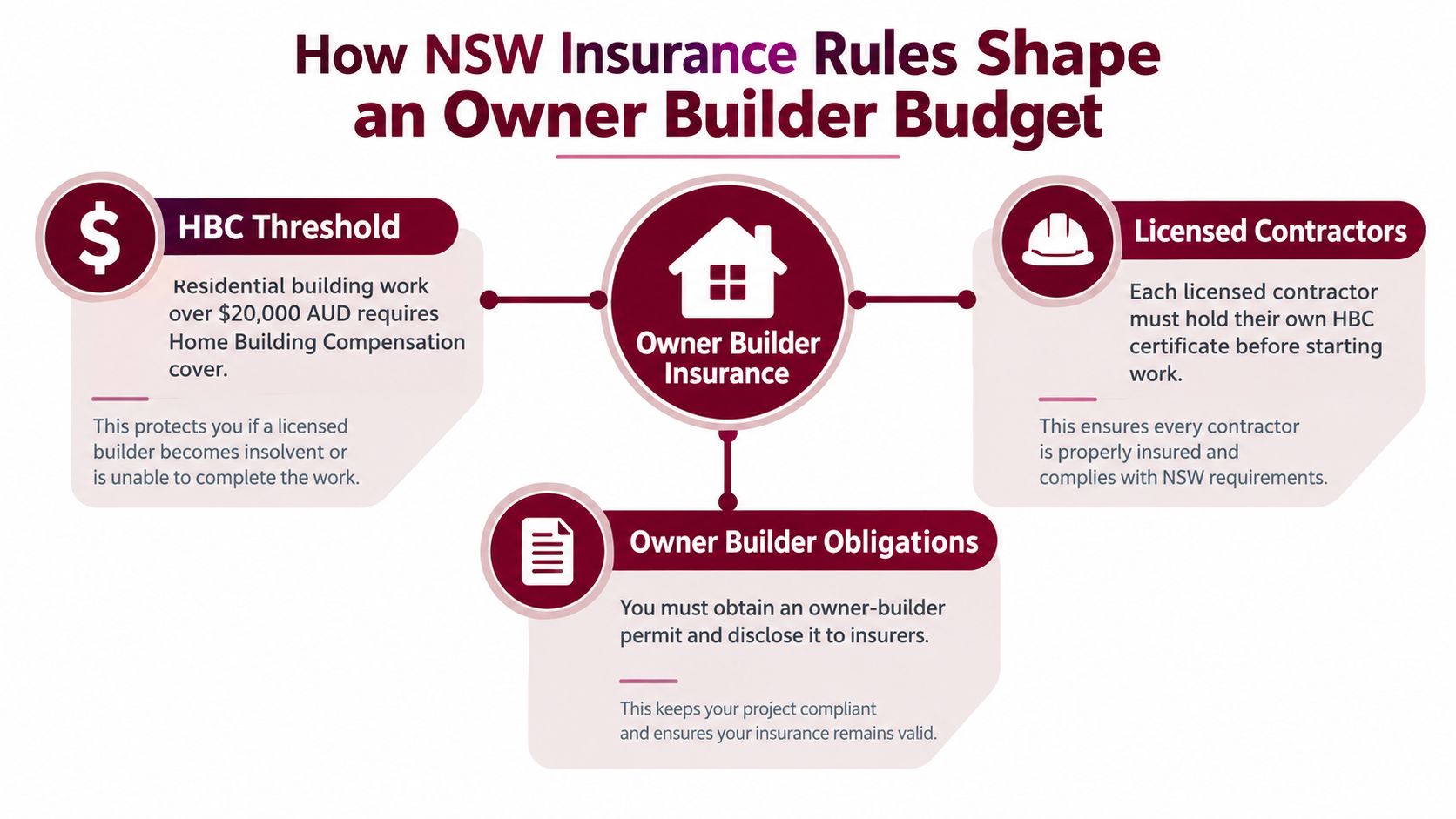
NSW does not price owner-builder insurance as one neat statutory product. The rules split the project into separate obligations, and each one affects the budget differently. Under NSW Government guidance, once residential building work goes over $20,000, licensed contractors doing eligible work must hold HBC cover and provide the certificate before they start or get paid, while the owner-builder's own self-work sits outside that cover.
Where the money goes
The budget usually lands in separate covers, not one bundled policy. For NSW owner-builders, that usually means contract works for loss or damage to materials and work in progress, public liability for injury or property damage, and, where relevant, plant and equipment for owned or hired gear SIRA's insurance obligations summary.
A proper budget also includes personal accident or income protection if you will be heavily involved on site. If you only price the building contract and ignore those extras, you understate the cost.
For a clearer overview of how those pieces sit together, see this NSW owner-builder insurance guide.
The owner-builder permit and the insurance budget should be built together. If the permit exists but the cover does not, the project is exposed.
What Moves the Premium
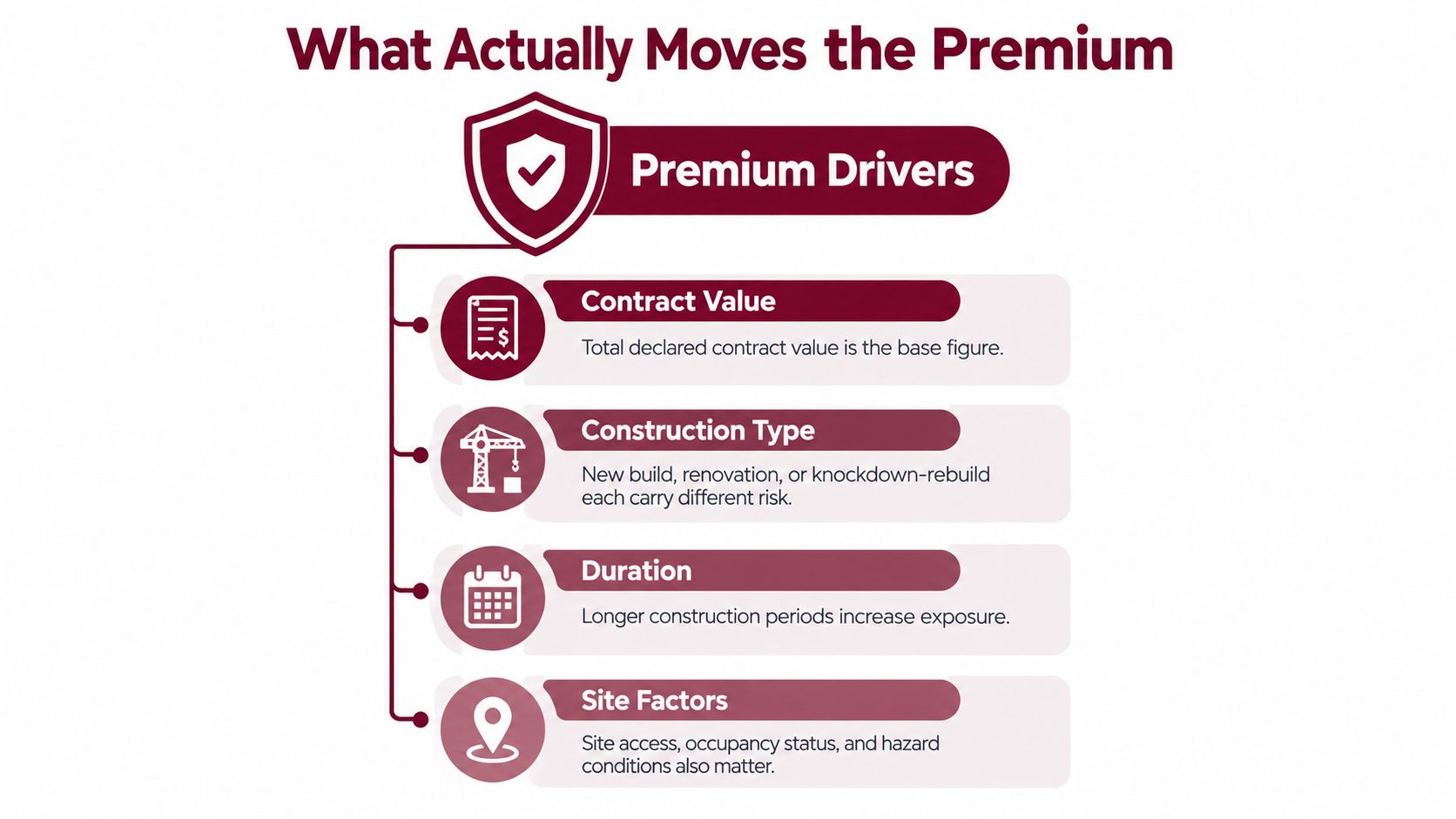
Insurers price the risk in front of them, not a formula on the wall. The main drivers are declared project value, construction type, duration, site occupancy, hazard exposure, subcontractor controls, site security, claims history, and the liability limit you choose.
The benchmark that still matters
Victoria's Essential Services Commission found owner-builders paid about $4.50 per $1,000 of project value in 2018, while registered builders paid about $3.00 per $1,000 Victorian ESC report. That gap tells you how underwriters think. Owner-builder projects can look less predictable on management, workmanship responsibility, and post-completion obligations. For a current pricing breakdown, see this contract works insurance cost guide for Australian builders.
Why old numbers age badly
Construction insurance has also risen across the market. Evidence cited to a federal inquiry said construction-sector premiums rose by about 60% in 2023, with broader reports of 20% to 60% increases across construction-related lines over the previous three years HIA submission.
Use the historical benchmark. Do not treat it like a live quote.
A Worked Example for a Mid-Range NSW Project
Take a $350,000 renovation. Don't ask for one lump-sum number and hope the insurer fills in the blanks. Ask for separate pricing on the project cover, then test how the premium changes if the site is occupied, if you're storing materials on site, or if the broker recommends a higher public liability limit.
| Cover line | What it protects | Info the broker needs |
|---|---|---|
| Contract works | Materials, work in progress, and damage during construction | Total project value, build type, timeline |
| Public liability | Injury or property damage to third parties | Site access, occupancy, subcontractor activity |
| Plant and equipment | Owned or hired tools and equipment | Equipment list, hire details, security |
| Excess choices | Your out-of-pocket share at claim time | Preferred excess, budget tolerance, risk appetite |
Compare quotes on the same declared value, GST treatment, excess, exclusions, and any delay cover. A cheaper premium with a narrow wording is a false economy. If you want help shaping the request, construction insurance quote information brokers need is the kind of checklist worth using before you send documents out.
The Costs Most NSW Owner Builders Forget to Budget
The quote is only part of the bill. If you sell within 7 years and 6 months of getting the owner-builder permit, NSW requires a consumer warning in the sale contract, and that can slow buyers down even though it is not an insurance premium.
The bigger budget miss is the extra project risk around the work itself. Line up separate pricing for demolition, temporary works, site security, and any storage of materials on site, because those items can change the cover you need and the premium you get back. That is where a lot of owner-builders go wrong, especially when they price the job like a simple renovation instead of a live construction site.
A straightforward budget should read like a project file, not a single line item. Use how much starting a business costs as a reminder that insurance sits inside a wider setup budget, then price the cover around the actual scope of the work.
Getting Quotes You Can Actually Compare
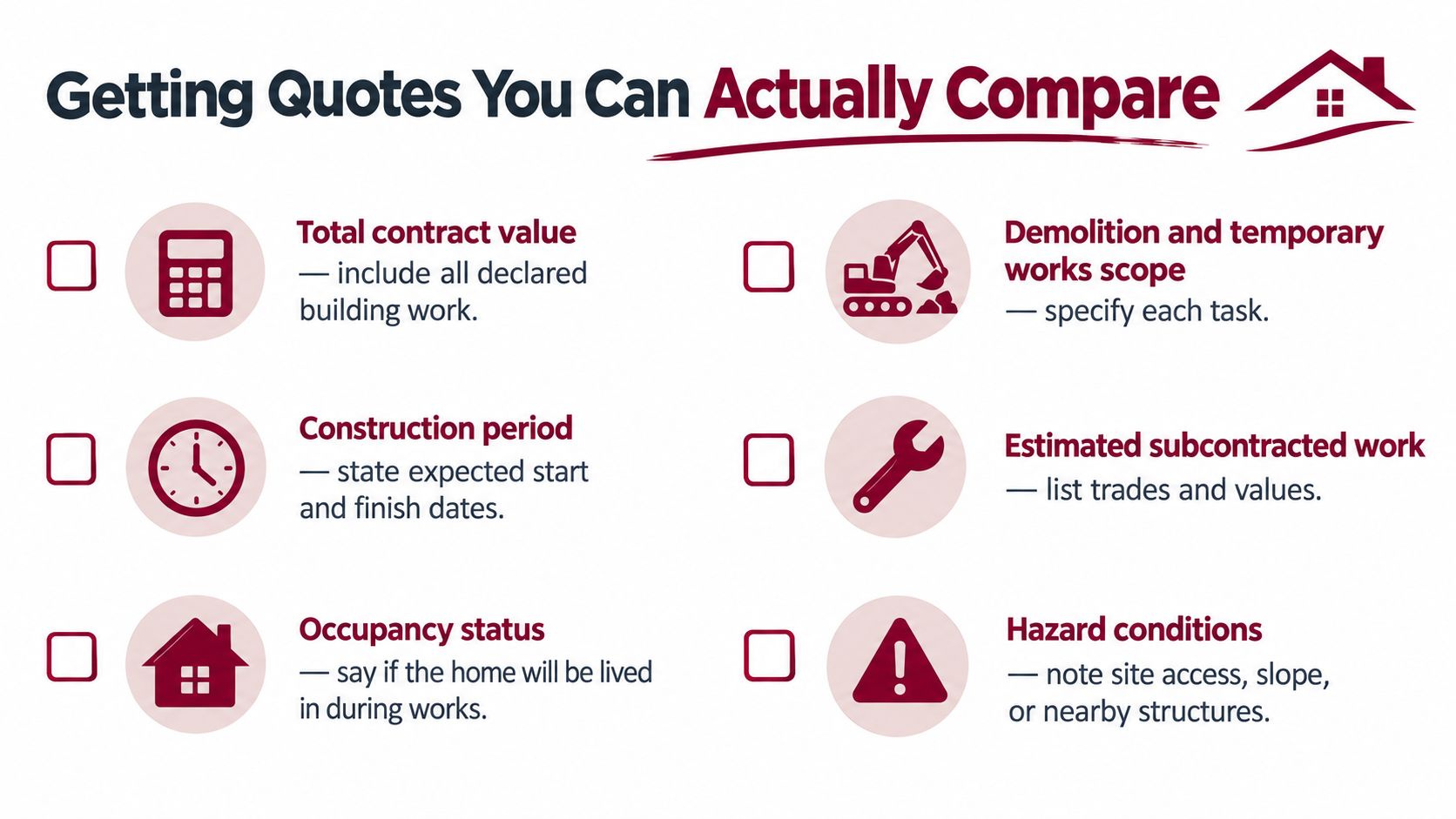
A broker can only price what you've disclosed. Send total contract value, demolition and temporary works, construction period, estimated subcontracted work, occupancy status, hazard conditions, and the public liability limit you want. If you're unsure how to frame the scope, Exayard construction estimating software can help you organise project inputs before you ask for a quote.
Three rules I'd follow on every project
- Use line-item budgeting. Don't settle for one premium number when the cover is really made up of several moving parts.
- Compare like with like. Excess, exclusions, and liability limits matter as much as the headline premium.
- Get it in writing early. A verbal estimate is not a binding quote, and it won't save you if demolition starts before cover is placed.
If you're a builder, tradesperson, or owner-builder and you want the numbers done properly, ABS Insurance Brokers Pty Ltd can assess the project details and place the cover that fits the work, not a generic template. Visit ABS Insurance Brokers Pty Ltd and get a project-specific conversation started before you break ground.