Agricultural drone insurance needs to reflect the job, especially when the aircraft applies chemicals. Crop imaging, stock observation and aerial spraying should not be treated as interchangeable activities when arranging cover.
The drone, its payload and potential losses to neighbouring property all deserve attention. The ABS drone insurance page is the starting point for a review; this guide focuses on the additional questions raised by farm operations.
Discuss your drone, pilots, work and insurance questions with ABS Insurance Brokers.
Bring your equipment list and operating details so the proposed cover can be reviewed.
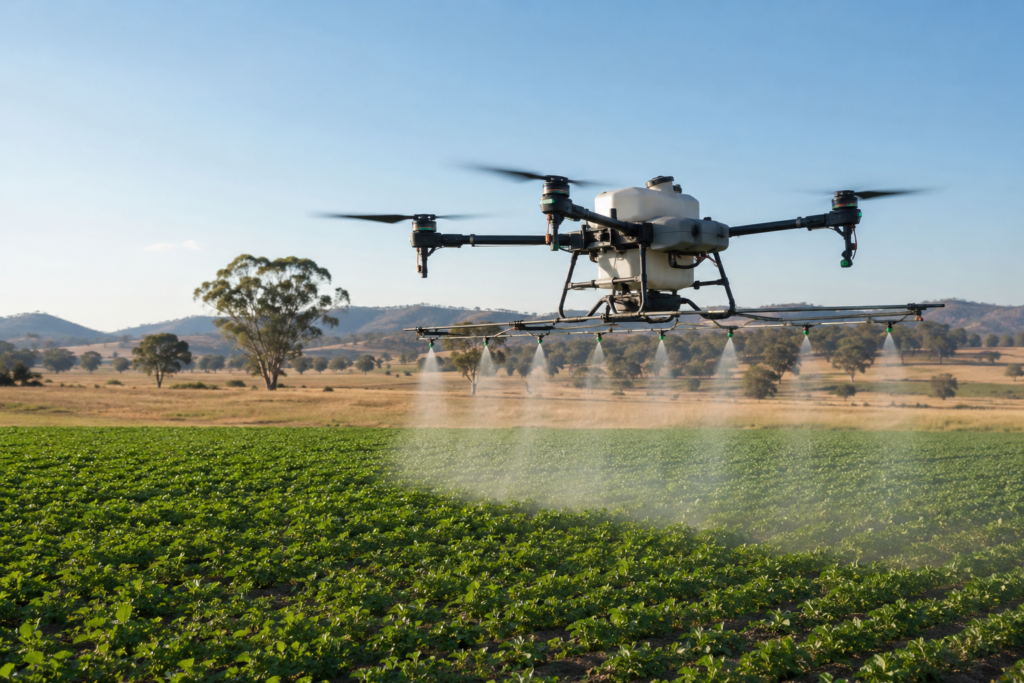
Tell the broker whether you fly only over land you own or occupy, work for other landholders, or operate through a contracting business. Explain the aircraft, payload, treatment areas and how the work is supervised.
Be specific about spraying, spreading, mapping and inspection work. For application operations, identify the products used and provide representative client contracts. A quotation described simply as “drone photography” does not properly present a business that also undertakes crop spraying.
Where more than one business is involved, identify who owns the equipment, employs or engages the pilots, contracts with the landholder and supplies the product.
A drone striking a shed and an allegation of chemical drift affecting a neighbouring crop involve different loss mechanisms. Ask specifically how the proposed wording treats aerial application, drift, pollution, contamination and damage to the property being treated.
Specialist aerial application liability insurance warrants discussion alongside the drone policy. Do not assume a general aviation liability section automatically covers every spraying exposure.
QBE’s aviation insurance overview describes aerial application liability as a specialist product area. Availability for a particular drone operation, product or application method must be confirmed through underwriting and the actual policy terms.
Build an itemised list covering the aircraft, tanks, pumps, nozzles or spreading attachments, batteries, chargers, controllers and any survey sensors. Identify separately what belongs to the business and what is hired or borrowed.
Ask which items are insured during flight, loading, cleaning, ground handling, road transit and overnight storage. Check whether the value includes the equipment needed to return the drone to its normal working configuration. Retain invoices and maintenance records to support that description.
Wear, corrosion, contamination and mechanical failure need specific questions. Equipment cover is not a maintenance agreement, and replacement hire or lost contracting income should not be assumed to follow from a damaged-aircraft claim.
Aviation approval and pesticide application requirements are separate issues. Review the relevant CASA permissions for the aircraft and operation, then check the requirements of the state or territory in which the work occurs.
For NSW work, the NSW EPA’s aerial pesticide application guidance explains requirements that can apply to RPA pilots and businesses, including qualifications and licensing. The applicable pathway depends on the operation; do not assume an aviation credential answers the EPA questions.
Give the broker copies of the relevant credentials and describe any operating restrictions. Policy requirements and regulatory requirements must each be checked; satisfying one does not automatically satisfy the other.
Use a process that fits the actual operation and applicable rules. These records help explain what was agreed and what occurred; they do not guarantee insurance cover. Before expanding into a new crop, chemical or region, ask whether the insurer needs to agree to the change.
Do not assume it does. Ask the farm insurer how aircraft, commercial contracting and aerial application are treated, then obtain written confirmation of the relevant cover.
It is a specific underwriting and wording question. Ask about drift, pollution, contamination, treatment risks, limits and exclusions rather than relying on the general liability heading.
That changes the operating description, but does not remove equipment or third-party exposures. Check both the applicable regulatory pathway and the proposed insurance terms.
Provide their details and values to the broker. Confirm how the equipment schedule treats them and whether the cover differs in use, storage or transit.
A quotation is not the same as confirmation that cover is in force. Resolve outstanding conditions and obtain written confirmation before relying on the insurance for the job.
Send the equipment list, application activities, credentials and contract requirements. We can help identify the questions to put to specialist aviation insurers.
General information: This article does not take account of your objectives, financial situation or needs. Cover is subject to underwriting, the policy wording, schedule, endorsements, limits, excesses and exclusions. Read the relevant documents and seek advice appropriate to your circumstances. Check current regulatory requirements with the relevant authority.