

What Is Landlords Insurance: An Australian Guide
What is landlords insurance, and how does it differ from cover for a home you occupy yourself? This guide explains the property, liability and rental-income questions to review when arranging insurance for a rented home. Discuss your occupancy and ownership arrangements with ABS’s home insurance team before selecting cover.
You've bought a rental property, found a tenant and arranged what appears to be sensible home insurance. Then a severe storm damages the roof, water enters the living areas and the tenants have to leave while repairs take place. You're suddenly dealing with building damage, possible liability concerns, repair invoices and an empty property that no longer produces rent.
That situation shows why landlords insurance isn't just ordinary home insurance with a different name. An owner-occupier policy is designed around your personal use of a home. A rental property creates a different risk profile because another household occupies the premises, you depend on rent, and you may supply fixtures, appliances or furnishings.
The policy wording matters more than the label on the certificate. A detailed policy can still contain exclusions for gradual damage, poor maintenance, defective workmanship, certain flood definitions, tenant-related losses or compliance failures. Your responsibility is to understand which event triggers each benefit, what evidence the insurer requires and where the cover stops.
Table of Contents
- What is landlords insurance?
- Core Components of Landlords Insurance
- Understanding Loss of Rent and Income Protection
- The Hidden Risks and Maintenance and Compliance
- Comparing Policy Options and Add-ons
- Practical Steps for Landlords
What is landlords insurance?
Consider a landlord whose tenants report water coming through a bedroom ceiling after a storm. The roof needs urgent attention, part of the home becomes unsafe and the tenants arrange alternative accommodation. The landlord may now face several separate financial pressures, including repairs to the building, damage to supplied contents, a claim involving an injured visitor and interrupted rental income.
A standard owner-occupier policy may not respond properly because it was arranged for a home where the owner lives. Once the property becomes a rental, the insurer needs to know about the change in use. Failing to update the policy can create a serious gap precisely when the owner expects protection.
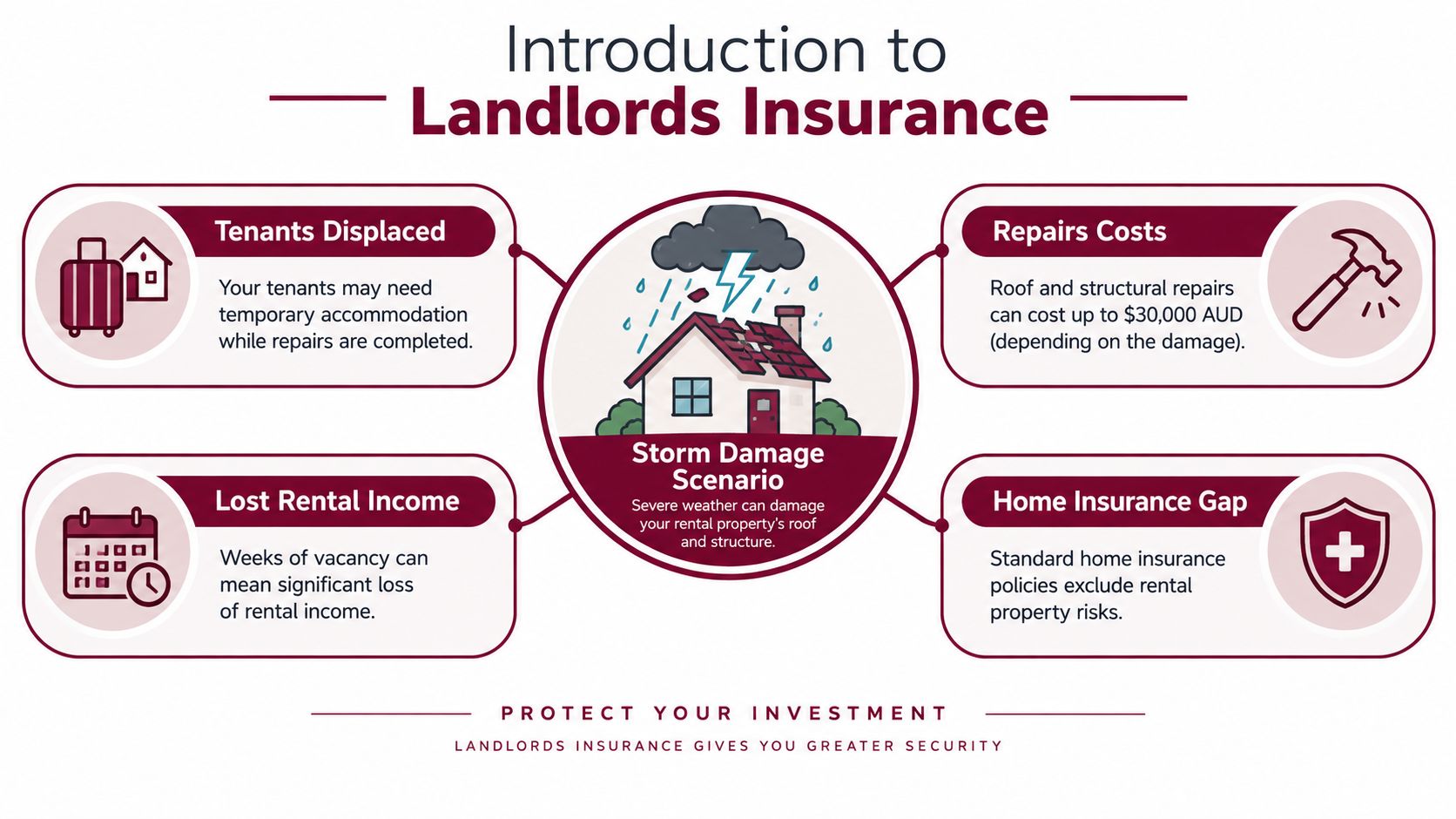
The difference between home and rental protection
Landlords insurance is designed around an investment property and the income generated from it. It can combine protection for the physical building with rental-specific risks, but the exact response depends on the policy schedule, definitions, exclusions, excesses and limits.
It also doesn't automatically protect everything inside the property. Landlord contents cover generally concerns items the owner supplies, such as curtains, appliances or furniture included with the tenancy. A tenant's clothing, electronics and personal furniture are a separate responsibility, and tenants should arrange their own contents insurance.
Practical rule: Treat the property's use as a key underwriting fact. If you move out and rent the home, tell the insurer before relying on the existing owner-occupier policy.
Landlords also have responsibilities beyond paying a premium. They need to maintain the property, comply with relevant tenancy and safety requirements, keep records and take reasonable steps to prevent further damage after an incident. For a broader overview of rental-property protection, you can find landlord insurance with VerticalRent, then compare its explanations with your own policy wording. Owners of non-residential investments may also benefit from this commercial property landlord insurance guide.
The central question isn't whether your policy sounds broad. It's whether the policy responds to the specific event, property use and financial loss you're facing.
Core Components of Landlords Insurance
The Australian Taxation Office groups common insurance expenses for residential rental properties into building insurance, contents insurance, public liability insurance and loss-of-rent insurance. Each category addresses a different exposure, so a policy shouldn't be judged by one overall word such as “complete cover”. Read the individual sections and ask what activates each benefit.
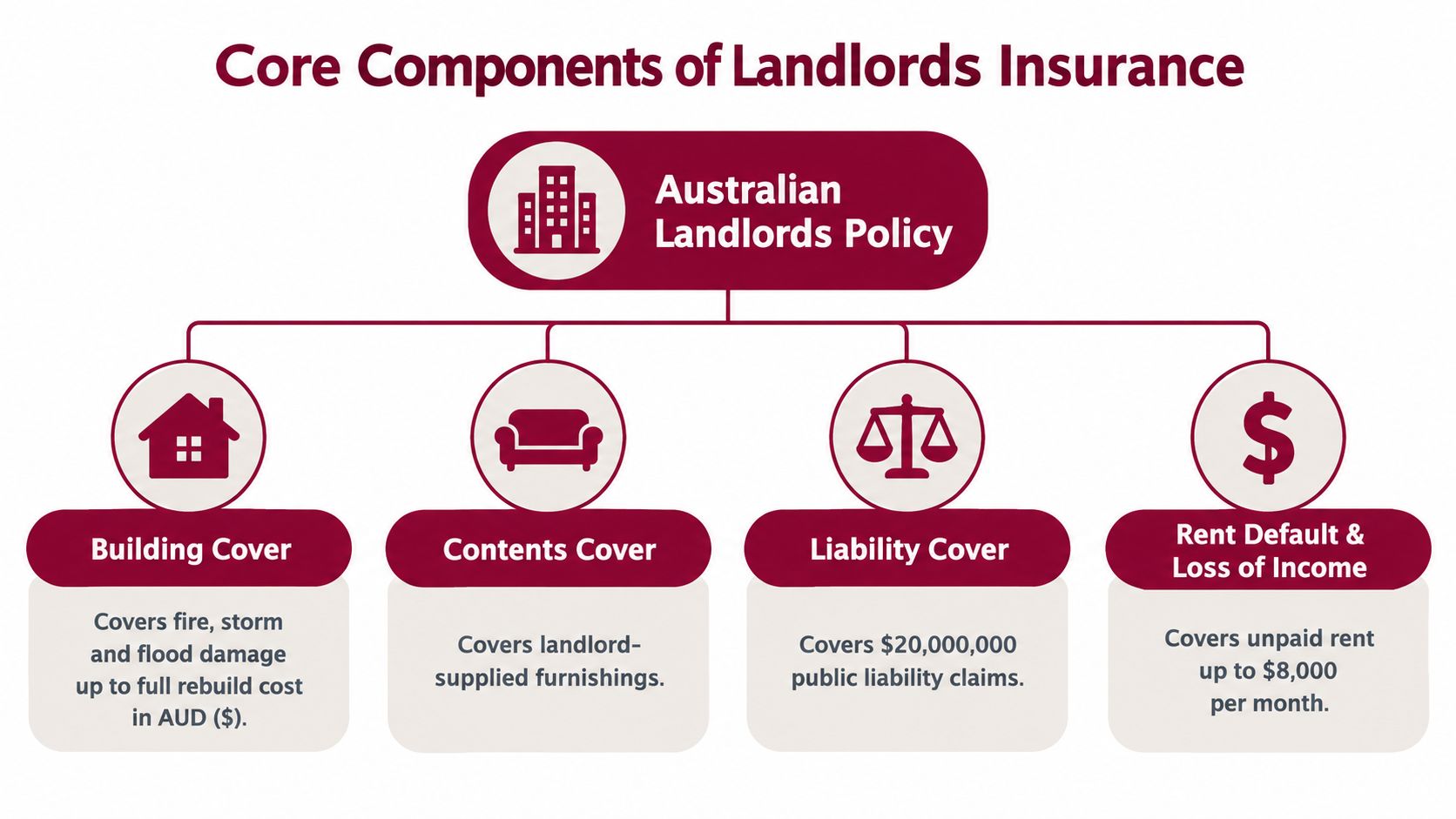
Building insurance
Building cover addresses physical damage to the rental structure when an insured event occurs. Depending on the contract, that may involve storm damage, fire, escape of water or another listed peril. The sum insured should reflect the likely rebuilding cost, not merely the property's purchase price, because land value and construction costs are treated differently.
A roof settlement issue, for example, may require careful assessment of whether a sudden insured event caused the damage or whether deterioration developed gradually. Understanding the difference between those causes is useful when reviewing a roof settlement guide for central Ohio, although Australian policy terms and local building conditions still apply.
Contents insurance
Landlord contents cover is for items belonging to the owner that remain at the property. It may apply to supplied appliances, carpets, curtains or furnishings, subject to the listed causes of loss and the policy limit.
It generally isn't a substitute for tenant contents insurance. If a tenant's laptop or sofa is damaged by a storm, the landlord's contents section may not respond because the items don't belong to the landlord.
Public liability insurance
Public liability cover deals with claims from third parties who allege that the landlord is legally responsible for injury or property damage connected with the premises. A tenant, visitor or contractor may raise an issue after an accident, but liability isn't automatic. The facts, legal responsibility and policy wording determine whether the insurer responds.
Loss of rent insurance
Loss-of-rent cover can address interrupted rental income after an insured event makes the property uninhabitable. It isn't the same as a guarantee that rent will arrive under every circumstance. Rent default, abandonment, a voluntary rent reduction and a property that is empty for ordinary marketing reasons may be treated differently.
The ATO also says insurance expenses can generally be claimed when the property is rented or genuinely available for rent, provided the owner incurs the cost and keeps adequate records. Tax treatment remains separate from the insurance decision, and the policy schedule still controls the practical protection.
Understanding Loss of Rent and Income Protection
Loss of rent becomes important when a covered event affects the property's habitability. A storm may damage a roof, an escape of water may affect electrical systems, or another insured incident may require tenants to leave. The building section deals with physical damage, while the rental-income section may address the resulting interruption.
The benefit usually depends on several conditions. The event must fall within the insured causes, the property may need to be formally considered uninhabitable, and the claim may be subject to a waiting period, an excess, a maximum payment period or a limit stated in the schedule.
Read the trigger, not just the benefit name
A policy can use similar language for loss of rent, rent default, abandonment and temporary accommodation, but those terms don't necessarily mean the same thing. Loss of rent after an insured building event is a different scenario from a tenant failing to pay. A rent reduction agreed under tenancy law may also produce a different claim outcome from unpaid rent.
Start with the event and build a record:
- Record the incident: Note when the damage occurred, what was affected and when the tenants could no longer use the property.
- Mitigate promptly: Arrange reasonable emergency work to prevent further damage, while keeping invoices and photographs.
- Notify the insurer: Follow the policy's claims process and provide requested reports, tenancy documents and payment records.
- Track the rental period: Keep evidence of the rent due, the period affected and any payment received under the policy.
- Check the tax treatment: The ATO states that payouts compensating an owner for lost rental income or repairs generally need to be included in assessable income. See its guidance on insurance payouts and rental property deductions.
Keep the claim file in one place. The policy, lease, rent ledger, inspection photographs, repair invoices and insurer correspondence should tell the same factual story.
An insurance payment isn't automatically a tax-free replacement for rent. The ATO also explains that, where a rental property is destroyed by fire or a natural disaster, certain remaining capital-works deductions may be available, reduced by insurance and salvage receipts. New capital works are generally claimed at 2.5% annually over 40 years, subject to the applicable rules and conditions.
The Hidden Risks and Maintenance and Compliance
Many landlords think a policy pays whenever something breaks. That assumption overlooks causation. Insurers assess what happened, why it happened, whether the event is insured and whether the owner met relevant maintenance and compliance obligations.
A burst pipe caused by a sudden incident may be treated differently from damage that developed because a known leak went unrepaired. Water staining, deteriorated roofing, unsafe electrical work and defective installations can all raise questions about whether the loss was sudden, gradual, preventable or excluded.

Compliance can affect the claim
The ACT's minimum energy-efficiency standards factsheet warns that non-compliant insulation installation can create injury or property damage that may not be covered by insurance, particularly where the work wasn't performed by a certified installer following the required electrical safety inspections. Read the ACT landlord energy-efficiency standards factsheet before arranging retrofit work.
That warning has a wider lesson. Insurance doesn't replace lawful property management. An investor upgrading an older home should consider not only the expected energy benefit, but also who performs the work, what certification is issued, whether electrical checks are completed and how the alteration affects the existing building.
Keep evidence such as:
- Inspection records: Document the property's condition before and during the tenancy.
- Repair invoices: Retain proof that leaks, electrical faults and structural issues were addressed.
- Licensed-work certificates: Store certificates for electrical, plumbing, insulation and other regulated work.
- Safety documents: Keep smoke-alarm records and other compliance evidence required in the relevant jurisdiction.
- Disclosure material: Preserve advertising, tenancy-agreement disclosures and exemption documents where applicable.
A comprehensive policy still has boundaries
Australian claims data for 2024 identified storm damage, water damage and theft as the highest-volume landlord-claim categories, and NSW recorded the second-highest number of storm-damage claims nationally, according to QBE's landlord survey material. Those categories make routine inspections and prompt repairs practical insurance controls, not administrative chores.
For owners dealing with shared buildings, the distinction between an individual landlord policy and strata arrangements also matters. Review how responsibilities are divided with guidance on residential strata insurance, then confirm the position with the strata manager and insurer.
Comparing Policy Options and Add-ons
The right policy depends on the property, tenancy arrangement and risks you can afford to retain. A basic building policy may protect the structure after listed events but leave rental interruption, tenant damage or legal expenses outside the contract. A broader policy may include those benefits, but usually with conditions, limits, waiting periods and excesses.
| Cover Type | Building Damage | Loss of Rent | Liability | Tenant Damage |
|---|---|---|---|---|
| Building-only cover | Usually included for listed events | Usually limited or absent | May be limited | Usually absent |
| Building and contents | Building plus landlord-owned items | Depends on the schedule | May be included | Depends on the wording |
| Rental-focused cover | Listed building damage | May respond after an insured event | Designed for property-related claims | May be included or optional |
| Broader policy with extensions | Subject to exclusions and limits | May include separate rent benefits | May include wider legal response | May include malicious or accidental damage |
Match cover to the actual exposure
A property in a location exposed to storms or flooding needs close attention to the definitions of those perils. Don't assume that “storm” includes every form of water entry, or that flood is included without checking the schedule. An older property may also need a more careful maintenance and rebuilding-cost review than a recently constructed dwelling.
Tenant damage can be another source of confusion. Accidental damage, malicious damage, pet damage, rent default and abandonment are different benefits in many contracts. Ask whether each is included automatically, available as an extension or excluded altogether.
Policy-reading habit: For every attractive benefit, identify the trigger, waiting period, excess, evidence requirement and maximum payment.
The ATO recognises building, contents, public liability and loss of rent as relevant categories, but it doesn't decide what your insurer must cover. Your contract does that. A practical building and contents insurance overview can help frame the conversation, while top landlord insurance plans today may offer another comparison resource. Treat comparison pages as starting points, not substitutes for reading the product disclosure statement.
Practical Steps for Landlords
A sound insurance review begins with the property's real use, not the policy's marketing name. Walk through the premises, list what you own, identify how rent could be interrupted and gather the documents that show the property has been maintained and managed properly.
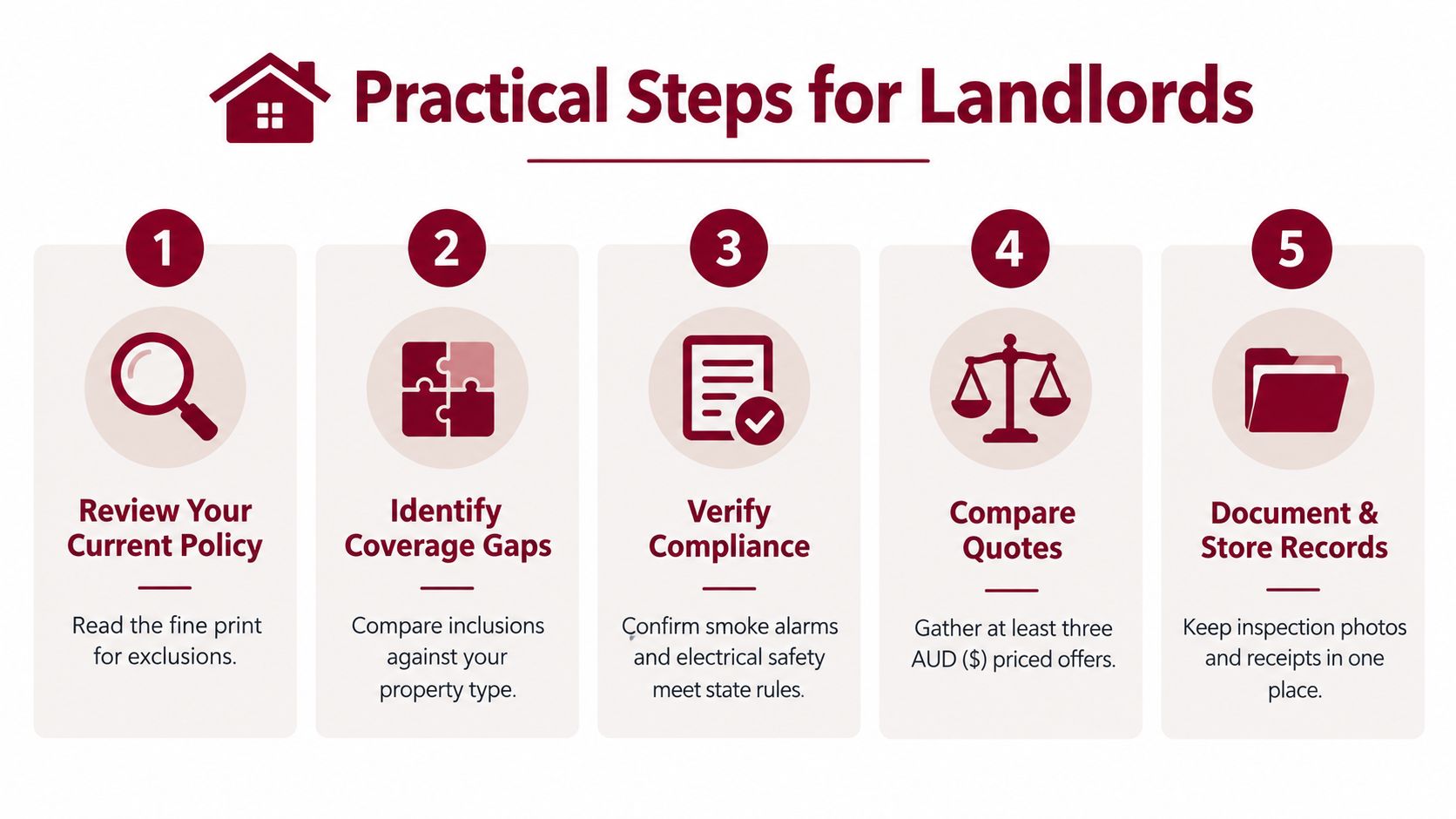
A practical policy audit
Review the current contract. Confirm the insured address, occupancy status, building sum insured, contents limit, excesses and listed events. Read exclusions and conditions instead of relying on the cover summary.
Map the income risk. Work out how a serious repair would affect rent, mortgage payments, rates and other holding costs. Then check whether loss-of-rent cover applies only after an insured event and whether the payment period is sufficient for the policy's defined circumstances.
Test the maintenance file. Match inspection reports with repair invoices, photographs and contractor certificates. A clear timeline can help demonstrate what you knew, what you fixed and how you responded after the incident.
Check compliance before improvements. Before installing insulation, electrical equipment or other upgrades, verify the applicable state or territory requirements and use appropriately qualified contractors. Ask the insurer how defective workmanship, gradual damage and resulting loss are treated.
Compare like with like. Put competing quotations beside each other and compare exclusions, limits, waiting periods, excesses, tenant-damage wording, flood definitions, liability protection and claims obligations. A lower premium isn't necessarily cheaper if a key exposure sits outside the policy.
The ATO says rental-property insurance expenses can generally be claimed when the property is rented or genuinely available for rent, subject to the relevant conditions and records. Keep premium documents, claim correspondence and payout information with your tax records, because an insurance payment may affect assessable income or deductions.
A broker can help translate policy wording into practical choices. ABS Insurance Brokers Pty Ltd provides insurance placement and advice across general and specialist lines, including property-related insurance, and can help landlords examine how building, liability, rental income and compliance considerations fit together.
ABS Insurance Brokers Pty Ltd can help you review landlord and property-related insurance with attention to policy wording, maintenance evidence and rental-income risks. Visit ABS Insurance Brokers Pty Ltd to discuss your property requirements and arrange a practical insurance review.